 en
en English
 中文简体
中文简体 Español
 русский
 Français
 عربى
عربى Deutsch
 Português
 日本語
日本語 한국어
한국어 italiano
Shengya
Shengya
Shengya
Shengya
Shengya
Shengya
Shengya
Shengya
Shengya
In high-volume metal fabrication environments, the speed and consistency of post-processing directly determine whether a production line runs profitably. Burrs, sharp edges, and oxide layers left behind after laser cutting, stamping, or CNC machining are not minor cosmetic issues — they create safety hazards, interfere with downstream assembly, and can lead to coating or plating failures. The pass-through magnetic deburring polishing machine addresses these challenges at production-line speed, combining magnetic force technology with a continuous conveyor format that eliminates the bottlenecks of batch processing.
What Is a Pass-Through Magnetic Deburring Polishing Machine?
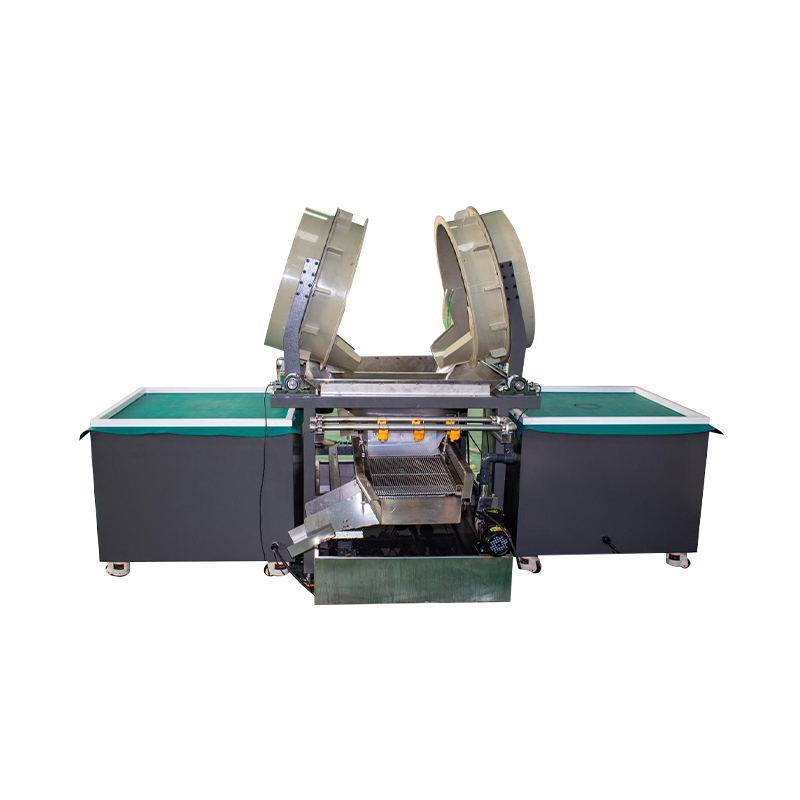
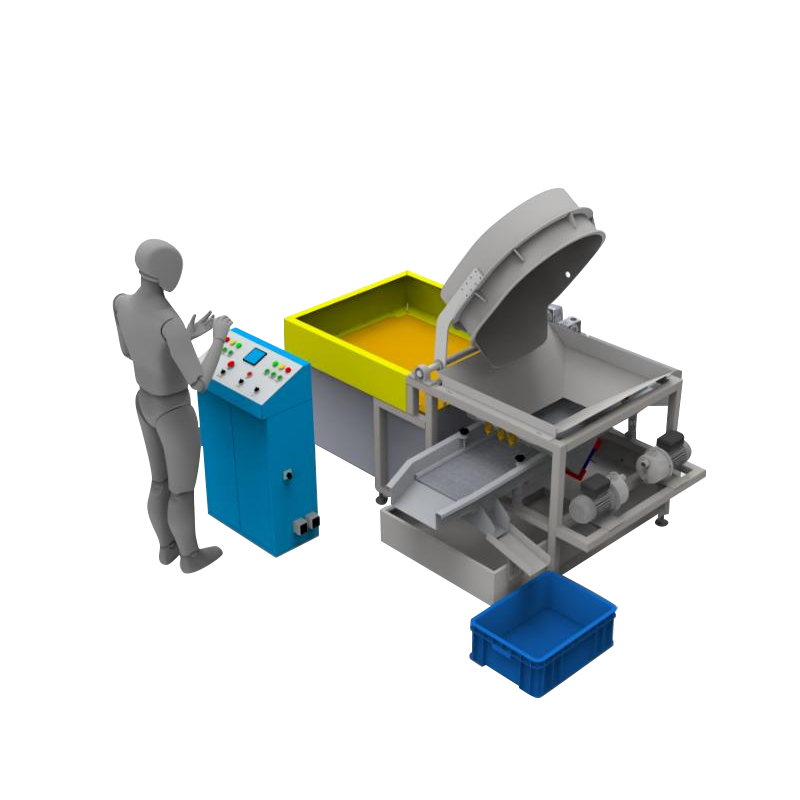
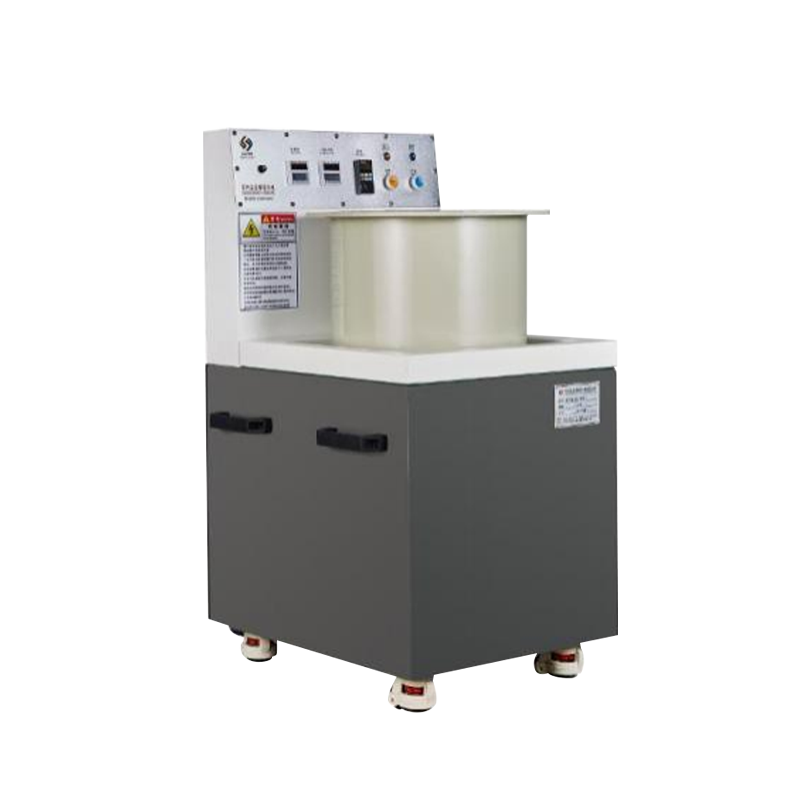
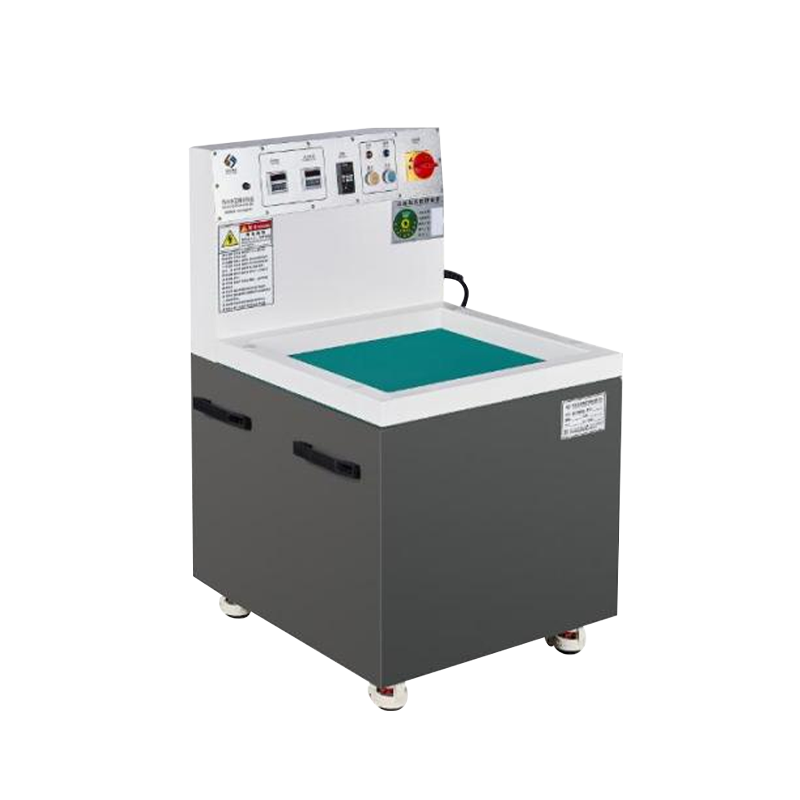
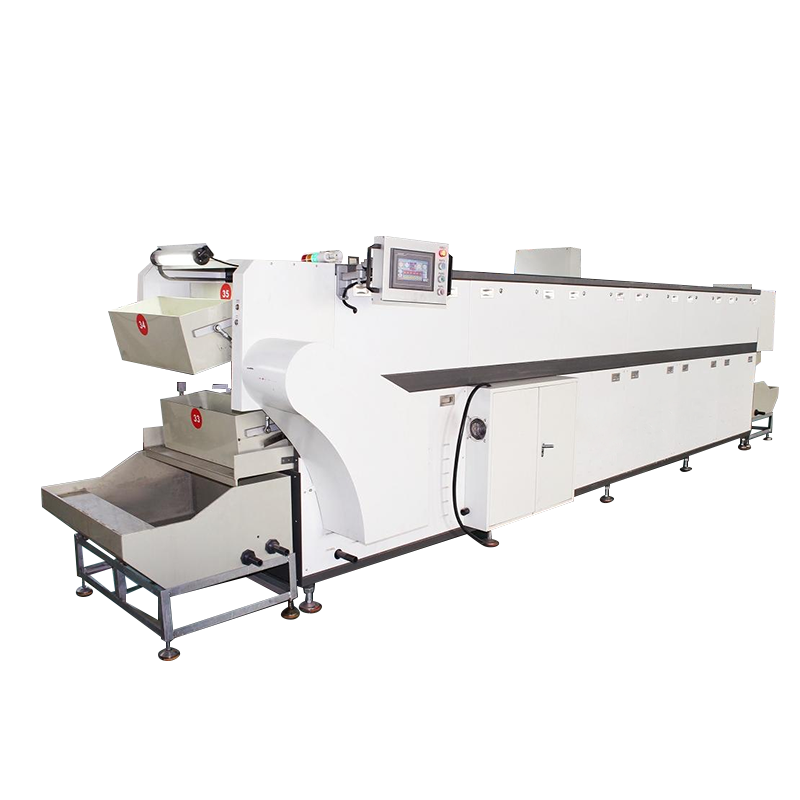
A pass-through magnetic deburring polishing machine is a continuous-feed surface finishing system in which sheet metal parts are loaded onto one end of a conveyor and exit from the other end — fully deburred and polished — without operator intervention between those two points. This "pass-through" or "through-feed" design stands in direct contrast to batch-style magnetic finishing machines, where a fixed quantity of parts is loaded into a tub, processed as a group, then manually unloaded before the next cycle begins.
The pass-through configuration is purpose-built for production lines. Because parts move continuously through the processing zone, there is no cycle time lost to loading, waiting, or unloading batches. A single operator can feed parts at the infeed end and collect finished components at the outfeed end, allowing the machine to sustain output rates that match the upstream equipment — whether that is a fiber laser cutter, a turret punch press, or a CNC plasma table.
These machines are central to the finishing stage of any magnetic deburring polishing machine lineup, and are especially valued in facilities where throughput consistency is non-negotiable.
How the Magnetic Deburring Process Works
The core of the machine is a high-speed rotating magnetic field generated beneath the processing trough or conveyor zone. This rotating field drives thousands of small stainless steel pins — typically between 0.3 mm and 1.5 mm in diameter — into rapid, multidirectional motion across and around the surface of the workpiece.
Unlike abrasive belts or grinding wheels that only contact exposed flat surfaces, the steel pins behave like a fluid medium. They penetrate into recessed areas, interior holes, threaded profiles, narrow slots, and sharp concave corners — reaching every edge regardless of how complex the part geometry is. The pins simultaneously deburr, polish, descale, and remove oxide layers, delivering a uniform surface finish across the entire workpiece in a single pass.
The process is entirely mechanical and dry. No chemicals, no abrasive compounds, and no consumable media are required beyond the stainless steel pins themselves, which have an exceptionally long service life under normal operating conditions. Critically, the magnetic force never exceeds the structural integrity of the part — the workpiece is never deformed, its dimensional accuracy is preserved, and precision features such as threads or tight tolerances are not damaged.
Processing time in a pass-through configuration is determined by conveyor belt speed, which is typically adjustable. For most sheet metal applications, a single pass of 5 to 15 minutes of cumulative contact time delivers a finished result that would take a skilled manual operator far longer to replicate — and with far less consistency.
Key Advantages Over Traditional Deburring Methods
Understanding why fabricators switch to pass-through magnetic deburring becomes clearer when compared to the alternatives:
| Method | Speed | Complex Geometry Coverage | Workpiece Risk | Labor Requirement |
|---|---|---|---|---|
| Manual deburring (files/grinders) | Slow | Operator-dependent | High (gouging, inconsistency) | High — one operator per part |
| Vibratory tumbling | Slow (hours per batch) | Good for small parts | Low | Medium — batch loading/unloading |
| Abrasive belt deburring | Fast on flat surfaces | Limited — misses holes and slots | Medium (surface scratching) | Medium |
| Pass-through magnetic deburring | Fast — continuous feed | Excellent — including holes, threads, slots | Very low — no deformation | Low — one operator per line |
For laser-cut stainless steel panels, aluminum enclosures, or copper components destined for electroplating, the ability to achieve a consistent, damage-free finish across every surface feature — including the ones a belt sander cannot reach — is the primary reason pass-through magnetic systems have become the preferred finishing solution in precision sheet metal shops.
Materials and Part Types Best Suited for This Machine
Pass-through magnetic deburring machines deliver optimal results across a broad range of metals and part configurations. The most commonly processed materials include:
- Stainless steel: The most frequent application, particularly for parts produced on fiber laser cutters. The machine removes the dark oxide ring around cut edges and produces a consistent brushed or bright finish.
- Aluminum: Soft alloys benefit from the low-contact-force nature of magnetic processing, which avoids the surface gouging common with abrasive methods.
- Brass and copper: Both materials polish to a high luster under magnetic needle action, making the machine suitable for decorative components and electrical connectors.
- Carbon steel: Effectively descaled and deburred prior to powder coating or galvanizing, improving coating adhesion and surface uniformity.
In terms of part geometry, the machine is ideally suited for flat or near-flat sheet metal components — panels, brackets, flanges, enclosures, and covers — particularly those with multiple laser-cut holes, interior cutouts, or fine slot features where interior edges are difficult to access. Sheet metal finishing solutions that combine a pass-through deburring stage with downstream rinsing and drying can process parts ready for immediate assembly or coating.
Parts with extreme depth (tall 3D forms) or very large format sizes may require specialized configurations, which is worth confirming with the manufacturer prior to purchase.
Integrating a Pass-Through Deburring Machine Into Your Production Line
One of the most compelling arguments for the pass-through format is how naturally it fits into a modern sheet metal fabrication workflow. A typical integration sequence looks like this:
- Laser cutting or punching: Parts exit the cutting machine with burrs, dross, and oxide edges.
- Pass-through magnetic deburring: Parts are fed directly onto the conveyor. Within a single continuous pass, edges are rounded, oxides removed, and surfaces polished.
- Rinsing and drying (optional inline stage): Some configurations include an integrated rinse and air-dry section, so parts emerge clean and dry.
- Downstream process — bending, welding, coating, or assembly: Clean-edged, burr-free parts enter the next stage without manual handling between steps.
This linear flow eliminates the accumulation of work-in-progress inventory that batch processing creates. In facilities running multiple shifts, a pass-through machine can process several thousand parts per shift with a single operator managing the infeed. The reduction in touch labor per part — compared to manual deburring stations — typically accounts for the largest share of the machine's return on investment within the first 12 months of operation.
What to Look for When Selecting a Pass-Through Model
Not all pass-through magnetic deburring machines are equivalent. The following specifications should be evaluated carefully before making a purchasing decision:
- Working width: The maximum width of parts the machine can process in a single pass. Common options range from 400 mm to over 1,000 mm. Facilities processing large-format panels should confirm the working width accommodates their largest standard sheet sizes.
- Conveyor speed range: Adjustable belt speed controls the amount of processing time each part receives. A wider speed range gives operators more flexibility to tune the finish level without changing the magnetic field parameters.
- Magnetic field intensity and coverage uniformity: The strength and distribution of the rotating magnetic field directly determines whether the stainless steel pins reach the interior edges of deep holes or fine slots. Ask for test results on representative part geometries before committing.
- Material compatibility of the conveyor system: For non-ferrous materials such as aluminum or copper, which cannot be held by magnetic beds, the machine should offer a non-magnetic conveyor belt or vacuum holding system to prevent parts from shifting during processing.
- Maintenance access and pin replacement: Stainless steel pins have a long service life, but they do wear and require periodic replenishment. Machines with easy-access trough designs and straightforward pin recovery systems reduce scheduled downtime.
- After-sales support and spare parts availability: For production-critical equipment, the availability of local or regional technical support, spare parts, and operator training significantly affects long-term reliability and total cost of ownership.
Selecting the right configuration for your specific materials, part geometries, and production volume is the single most important factor in getting full value from a pass-through magnetic deburring machine. To discuss your requirements and receive a specification matched to your production line, contact us for a custom quote.