 en
en English
 中文简体
中文简体 Español
 русский
 Français
 عربى
عربى Deutsch
 Português
 日本語
日本語 한국어
한국어 italiano
Shengya
Shengya
Shengya
Shengya
Shengya
Shengya
Shengya
Shengya
Shengya
A magnetic deburring machine solves a problem most metalworking shops know too well: burrs are easy to create and stubborn to remove consistently. Files, scrapers, brushes and vibratory bowls all work to a point, but they depend on operator feel, they struggle with internal features, and they can quietly damage the tolerances you spent good machining time holding.
Magnetic deburring takes a different route. Instead of pushing an abrasive against a fixed edge, it moves thousands of tiny stainless steel pins across the part with a rotating magnetic field. The pins follow the geometry wherever it leads, including into cross-drillings and threads, and the cycle runs from a recipe rather than from a machinist's wrist.
What a Magnetic Deburring Machine Does
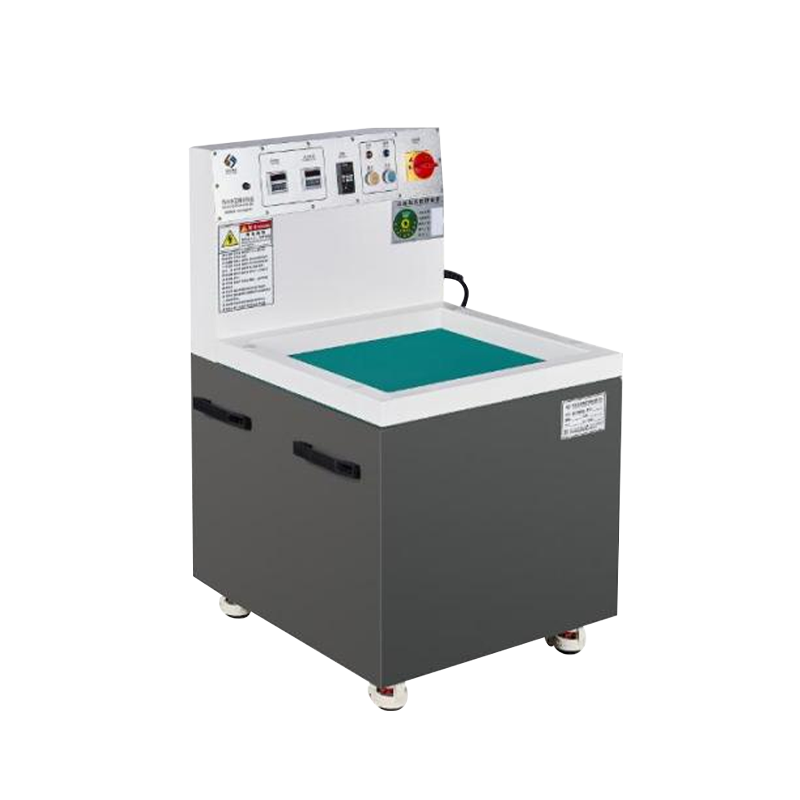
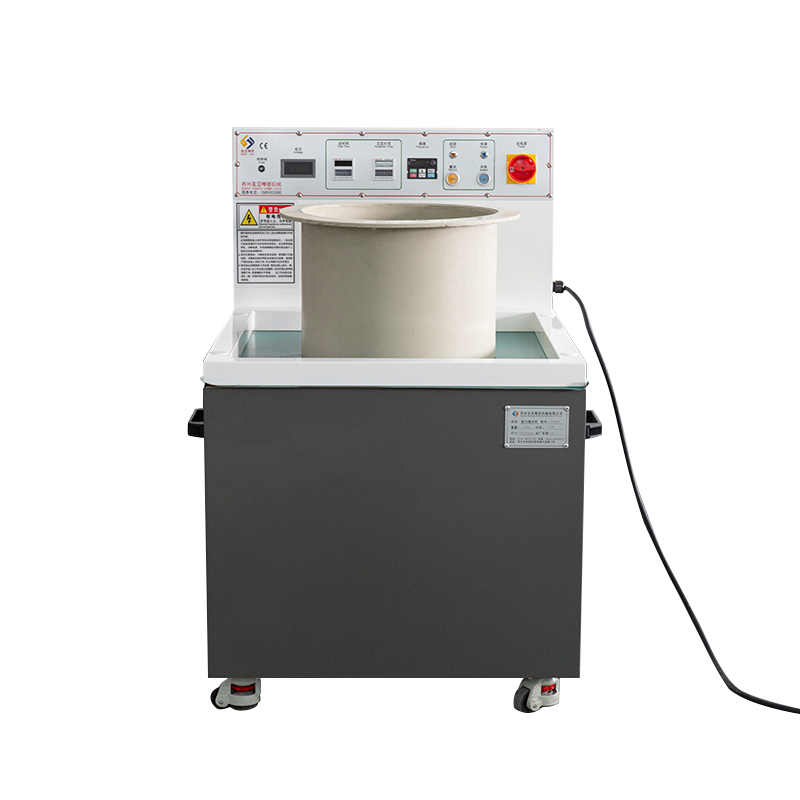
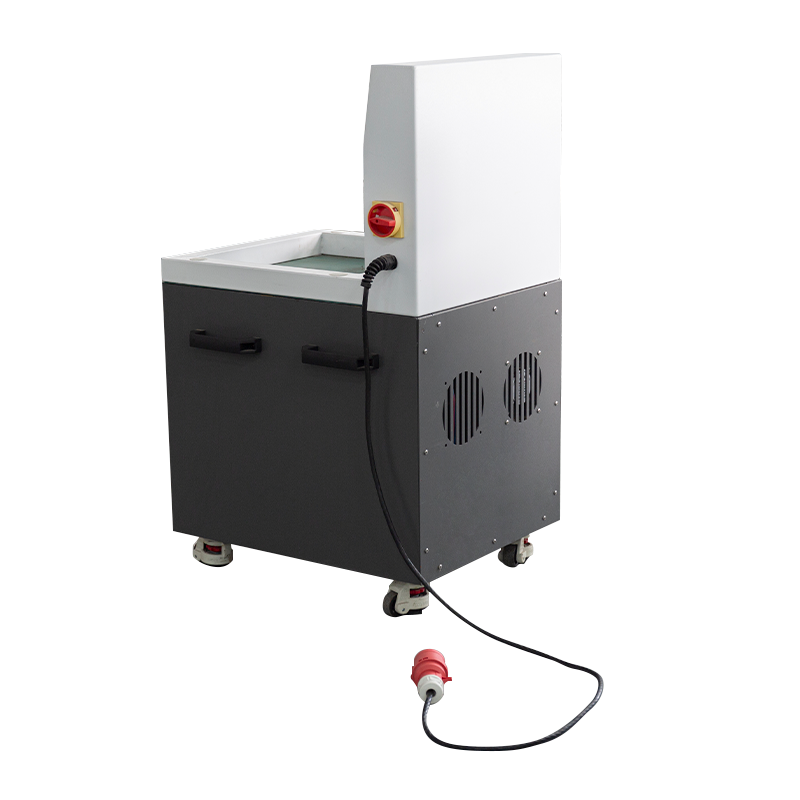
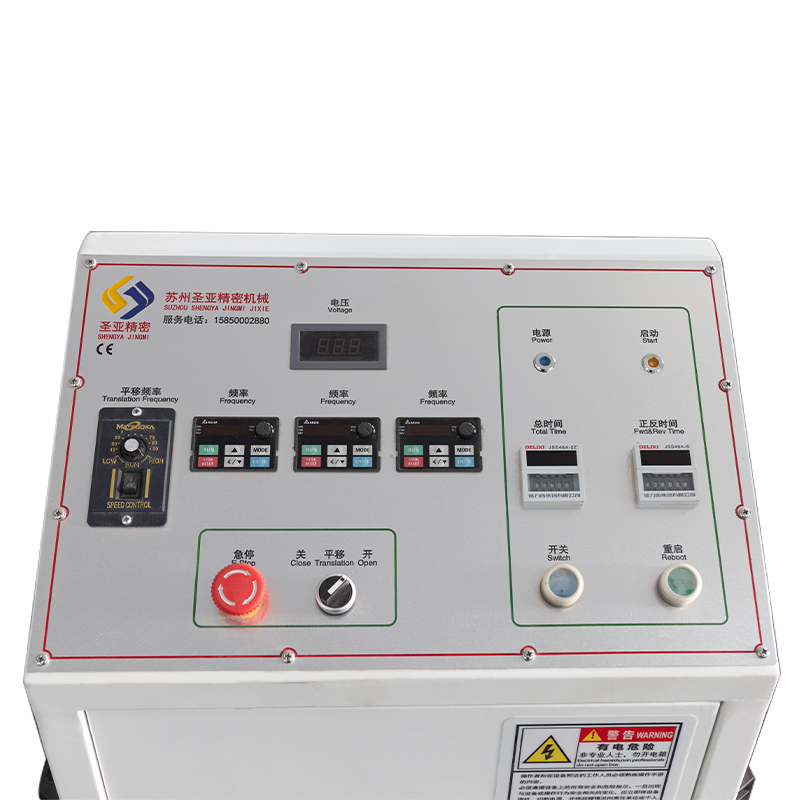
The hardware is simple to describe. A welded stainless steel tank holds the workpiece, a charge of stainless steel media, water and a small amount of compound. Underneath, one or more motor-driven disc assemblies spin and create a moving magnetic field. The pins follow that field, tumbling, rolling and sliding across every surface they can reach.
Why the process is gentle on tolerances
Magnetic finishing removes material through thousands of light contacts rather than one aggressive pass. A sharp edge is gradually radiused — often by a few microns up to a fraction of a millimetre — while flat faces and bores are barely touched. There is no clamping force, no localised heat from a grinding wheel, and no part-on-part impact the way there is inside a tumbling barrel.
That combination is why the process suits parts that are delicate, thin-walled, threaded, cross-drilled or otherwise awkward to handle. Media size is matched to the smallest feature on the part: fine pins for small holes and fine threads, larger pins or shaped media for heavier burrs and open surfaces.
Why the results repeat
Once the media mix, compound concentration, cycle time and loading pattern are established, the run repeats. The same load goes in, the same cycle runs, the same edge comes out. That is the real difference between a magnetic machine and a bench with three operators doing their level best: the process is documented, so it can be repeated by anyone on the shift, on a Monday morning or a Friday afternoon.
If you would like the fuller walkthrough of the field, the media and the compound working together, we put the details in a plain-language explainer on how a magnetic deburring polisher works.
Why Shops Replace Hand Deburring With It
Hand deburring is not a bad process. It is simply an expensive way to get inconsistent results on repeat work. The table below summarises what usually changes when a shop moves a part family onto a magnetic machine.
| What Changes | Hand Deburring | Magnetic Deburring Machine |
|---|---|---|
| Edge consistency | Varies with operator and fatigue | Uniform across the batch |
| Internal features | Difficult or impossible to reach | Media flows into holes and threads |
| Dimensional risk | File marks and over-rounding | Controlled radius, tolerances held |
| Labour per batch | One part at a time, all shift | Load, run, unload, move on |
| Heat and stress | Local heating and pressure | Cool, low-stress action |
| Repeatability | Depends on skill | Set by recipe and cycle time |
Matching the Machine to the Part
Every magnetic machine is built around a tank, and the tank should be built around your parts. The useful question is not how large the machine is, but how much of your part family fits in one load and how long a cycle takes. Two broad categories cover most enquiries.
Lab-grade and small batch work
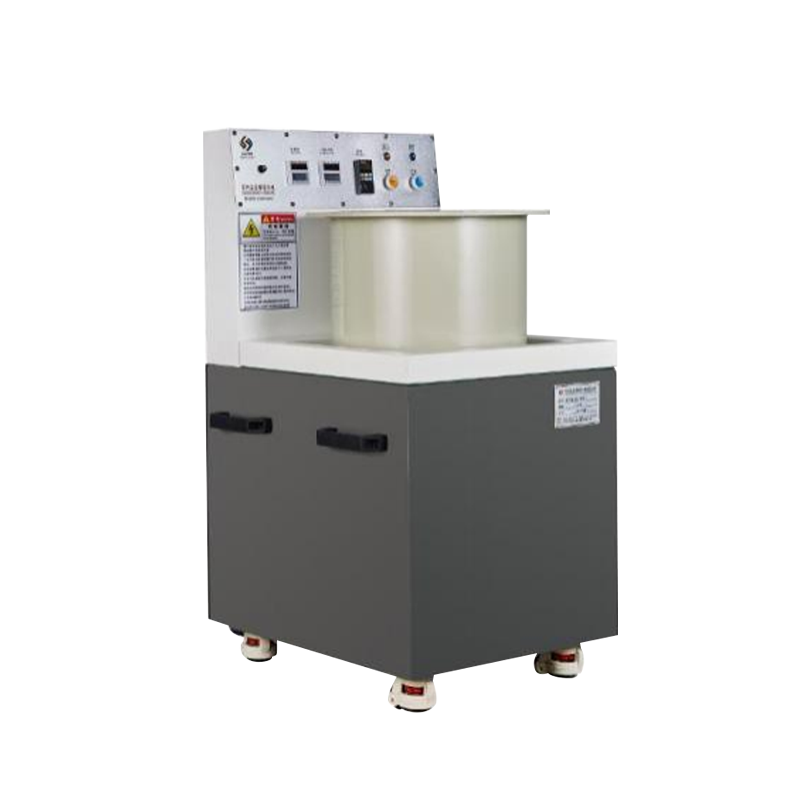
For prototypes, sample runs, small precision components and research work, a compact lab-grade unit makes sense. Small tanks, fine media and quick changeover let you test a process before committing a production line to it. The SY8080 lab-grade small batch precision magnetic deburring polishing machine was designed for exactly this role, and it is often the machine that answers the question of whether magnetic finishing suits a part at all.
Standard industrial batch work
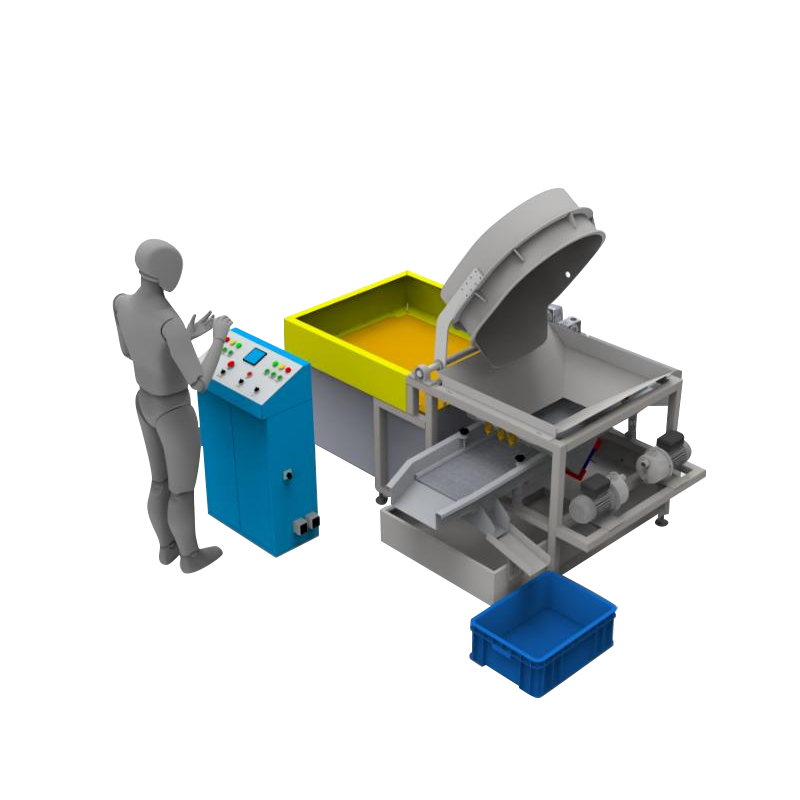
For repeat batches of small to medium parts, a standard industrial machine is the workhorse. Tank volumes are sized so that one operator can load a batch, start the cycle and get on with something else while the machine finishes the edges. Models such as the SY8120 fit this pattern well, and the wider SY1080 or the heavy-duty SY8180 cover shops that need more capacity or a larger footprint per load.
 SY8120 Standard Industrial Magnetic Deburring and Polishing MachineA production workhorse for small to medium repeat batches, featuring a 3KW motor, 520×520mm table, and 400/450mm vessels for deburring and polishing.View Product →
Whichever size you look at, check three numbers against your own parts: the usable tank dimensions, the maximum load weight the drives are rated for, and the cycle time you would need to hit your output target. A machine that fits the part but misses the takt time is still the wrong machine.
When Your Parts Are Long, Wide or Heavy
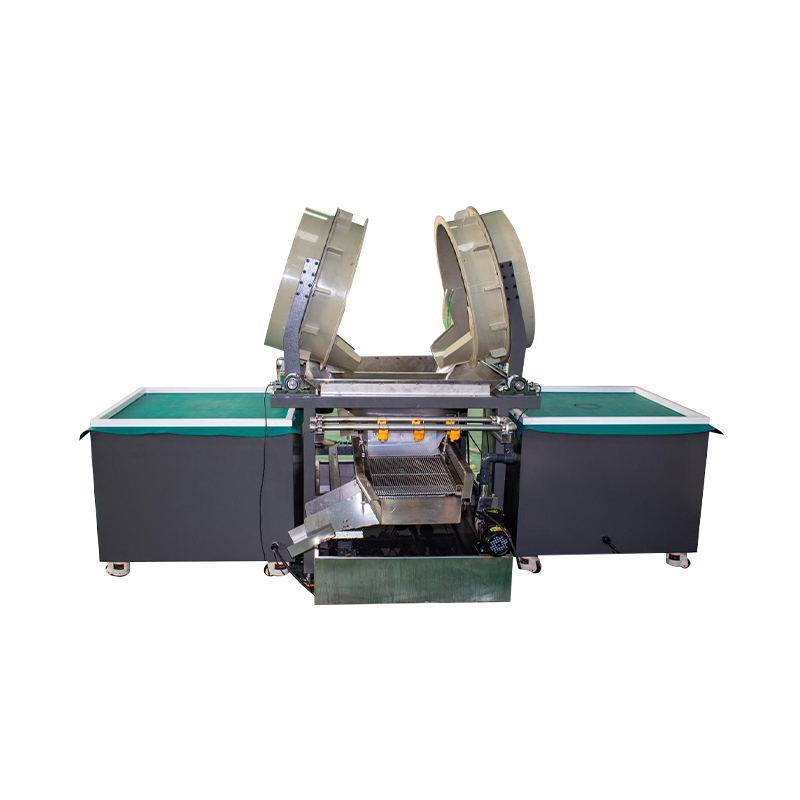
Long shafts, rails, extrusions, plates and welded frames do not sit comfortably in a square tank. This is where horizontal reciprocating designs earn their place. The bed is extended, the tank is shallow and long, and the workpiece is supported while the magnetic field works along its length.
The range moves from the SY1200 long-bed and SY1400 extended-bed machines through the dual-drive SY1800 and the 2-metre-class SY2200, up to the SY2800, which is built for parts between roughly two and six metres. For a fabricator deburring a rail that arrives off a saw, or a machined plate that cannot be cut down to fit a standard tank, that extra bed length is the difference between a process that works and a process that does not exist.
 SY2800 Tri-Drive Mega-Class Ultra-Long Magnetic Deburring Polishing MachineBuilt for ultra-long parts over 2.5 metres, with three 4.0KW motors, a 2700×620mm platform, and 2600×500×250mm vessel for even finishing.View Product →
Supporting the part properly matters as much as the tank size. If a long component sags or shifts during the cycle, the media will not contact it evenly, and the edges at one end will look different from the edges at the other.
Moving to Inline Production
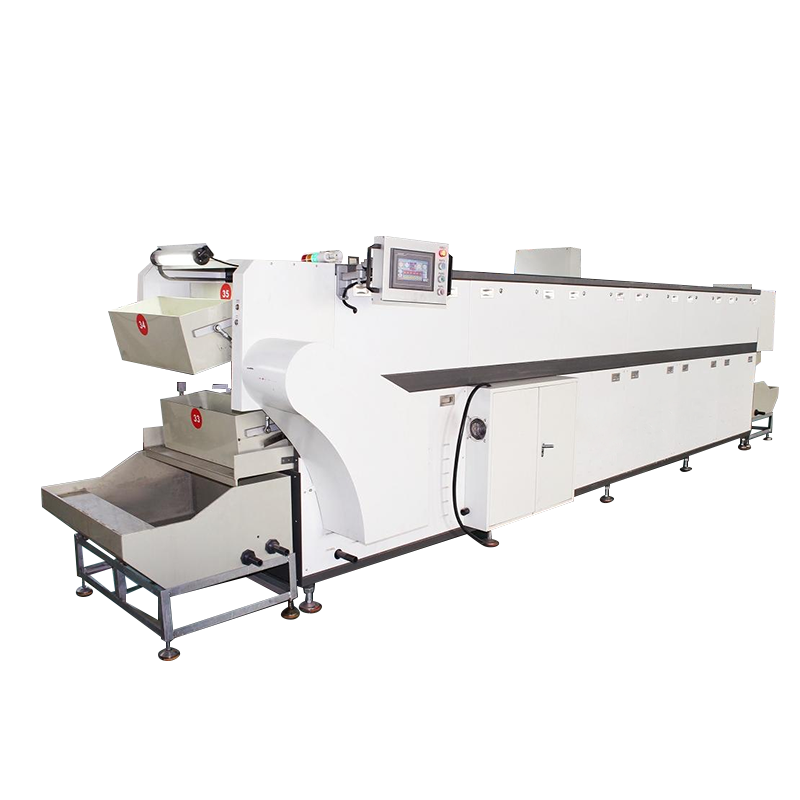
At some point, batch processing becomes a bottleneck. When volumes rise and the parts are small enough to travel, a pass-through machine lets deburring become part of the line rather than a separate operation. Parts enter at one end, travel through the magnetic field, and exit deburred and rinsed, with no manual loading of the tank.
This is the logic behind continuous pass-through designs such as the SYP series, and behind the automated assembly line magnetic polishing machine for shops integrating finishing directly into an existing production flow. Where throughput per station matters more than continuous motion, the dual-station SYFZ600 and the auto-tilt reciprocating SYFZ30 offer a middle path: heavier loads, higher output per hour, and a lower dependency on an operator standing at the machine.
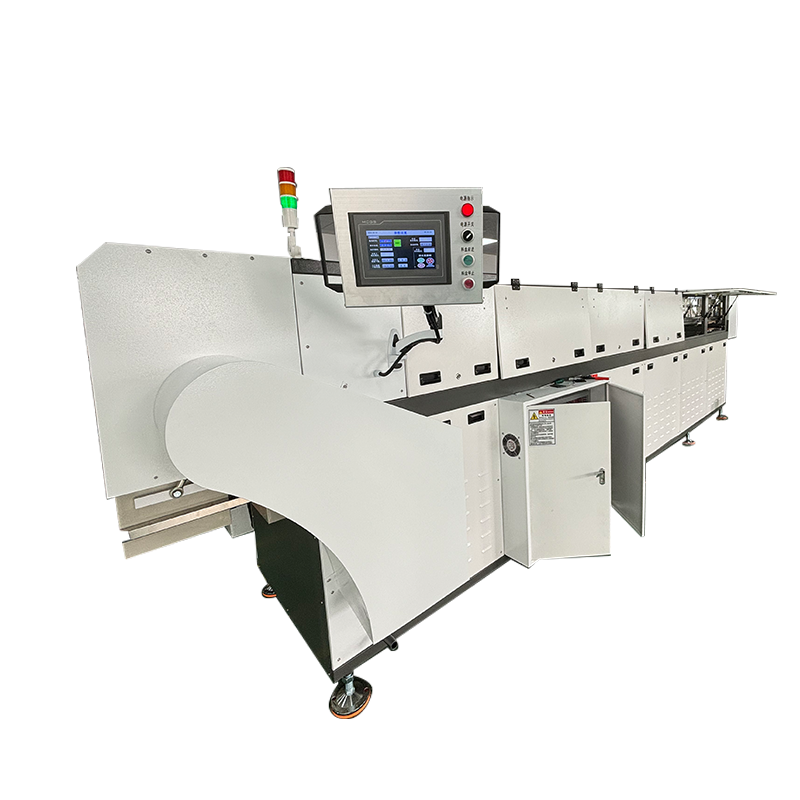 SY-P Series Continuous Pass-Through In-Line Magnetic Deburring Polishing MachineFor high-volume lines, this tunnel-type system uses continuous flow, modular grinding boxes, and a multi-stage magnetic zone managed by one operator.View Product →
The trade-off is flexibility. A pass-through machine is happiest when the part family is stable and the geometry is predictable. If your mix changes every week, batch equipment will usually serve you better.
Do Not Stop at Deburring
Parts come out of a magnetic machine wet, coated in compound and often slightly warm. What happens next decides whether the finish survives to the next operation. A precision ultrasonic cleaning machine removes compound residue and loose media from blind holes and threads, which matters before plating, assembly or inspection.
Temperature control is the second piece. A circulating chiller keeps the tank and the cleaning bath at a steady temperature so cycle times stay honest through a long shift. The third is water. A circulation and purification system lets you reuse process water instead of sending it to drain, which reduces both cost and the environmental load of the finishing cell. Taken together, deburring, cleaning, cooling and water treatment form one process chain, and it pays to plan them as a chain rather than as four separate purchases.
A Practical Checklist Before You Buy
Bring real parts and real numbers to the conversation. A supplier who understands the process will ask about all of the following, and if they do not, you should raise them yourself.
- Measure the part mix and find the largest and smallest components you expect to run in the next two years, not just this week.
- Identify the tightest tolerance on any part that will go into the tank, and confirm the machine can hold it.
- List the features that actually need deburring — holes, threads, slots, edges — and the smallest of them.
- Decide whether you need batch processing, inline pass-through, or a combination of both.
- Match the media and compound to the material, the burr size and the finish you want, then test.
- Plan the rinse, the cooling and the water recycling at the same time as the machine itself.
- Ask about spare parts, media resupply and what happens when a drive needs attention.
A short trial on your own parts will tell you more than any specification sheet. Ask for a cycle that produces a sample you can inspect, measure and sign off.
Talking to the People Who Build the Machines
We are Suzhou Shengya Precision Machinery, a metal surface treatment equipment manufacturer based in Suzhou, China. We have been building magnetic deburring and polishing equipment for more than fourteen years, with around two thousand square metres of production space, a dedicated research centre and more than twenty patents behind the current range. Our machines run in laboratories, job shops and automated production lines, and the questions we hear most often are the practical ones: will it fit my part, will it hold my tolerance, and how many parts per hour.
If you send us a drawing and a sample, we can usually tell you which configuration makes sense and what the cycle would look like. You can reach our team here and describe the parts you need to finish — we are happy to talk through the options before you commit to anything.