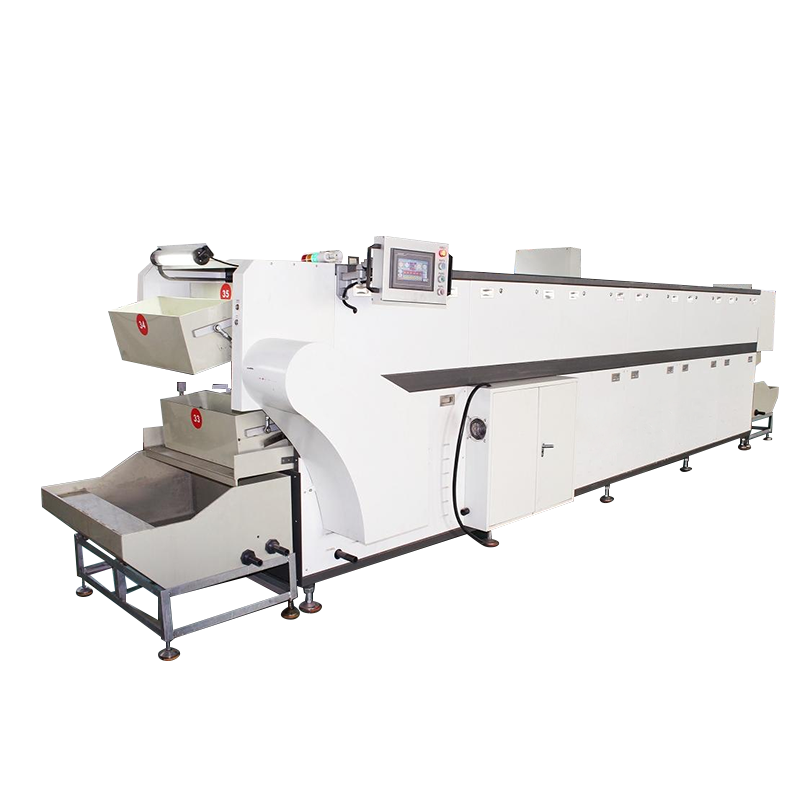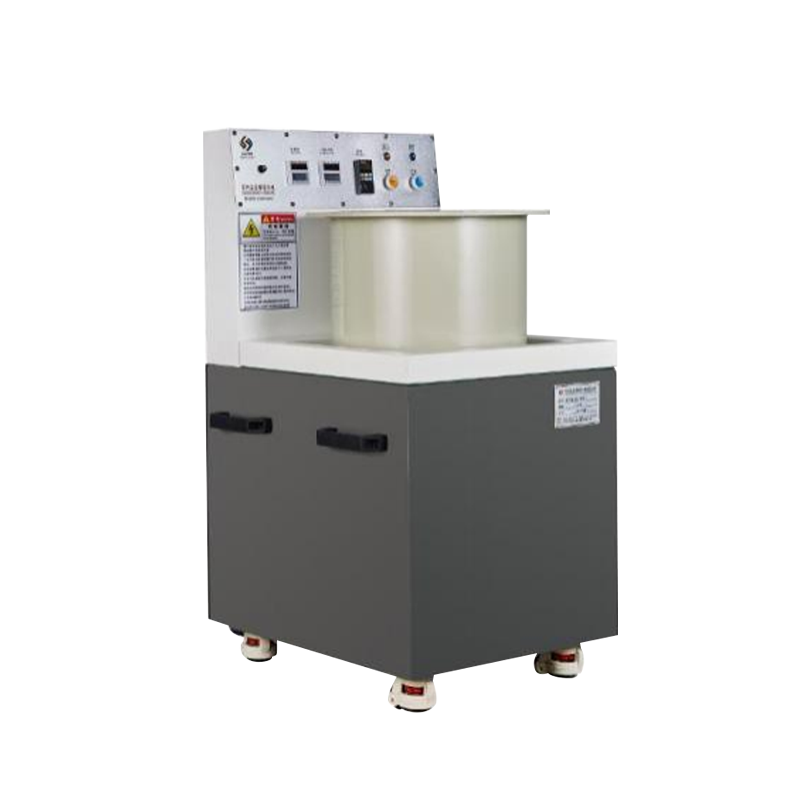
 en
en English
 中文简体
中文简体 Español
 русский
 Français
 عربى
عربى Deutsch
 Português
 日本語
日本語 한국어
한국어 italiano
Shengya
Shengya
Shengya
Shengya
Shengya
Shengya
Shengya
Shengya
Shengya
If your shop machines a lot of small and mid-sized metal parts, you already know where the hours go. It is rarely the cutting. It is the edges left behind — the burrs, the feathering, the sharp lip on a cross-hole that has to be dealt with before the part can leave the floor. A magnetic abrasive polishing machine exists for exactly that moment in the process.
Instead of chasing burrs by hand or tumbling parts for hours, it uses a rotating magnetic field and a bed of stainless steel pins to finish edges, holes and surfaces in one repeatable cycle. We have been building these machines in Suzhou for more than fourteen years, and we have watched them settle into everything from one-person workshops to fully automated assembly lines. Here is a practical look at how the process works and how to choose a machine that fits your parts.
What the Machine Actually Does
First, a clarification worth having: a magnetic abrasive polishing machine is a finishing machine, not a cutting machine. Its work begins after milling, turning, drilling or stamping has already produced the geometry. What it removes is what machining leaves at the edges — burrs, fine feathers, tool marks and the sharp transition where a face meets a wall.
The mechanism is easy to picture. A tank holds a mix of stainless steel pins, abrasive media and a liquid compound. Magnets spin and drag those pins through the fluid, and the pin mass behaves like a soft, flexible brush that touches every surface the liquid can reach. It slides into slots, cross-holes, threads and internal channels that a rigid tool simply cannot follow. The force is gentle and spread out, which is why thin walls and fine threads usually come through the cycle unharmed.
A detail that surprises many first-time buyers: the workpiece does not have to be magnetic. Aluminium, brass, zinc die castings and copper are processed every day, because the field acts on the steel pins rather than on the part. Material type matters far less than geometry and burr condition.
If you want a deeper technical walkthrough before reading on, our note on how a magnetic abrasive polishing machine works and what it can finish covers media behaviour and cycle design in more detail.
How a Cycle Runs, Step by Step
- Load the parts. Small components go in loose; larger ones are placed by hand or held in a simple fixture, with no clamping force on finished surfaces.
- Add media and compound. Pin load, abrasive mix and compound concentration are chosen for the material and the finish target.
- Start the cycle. The magnets rotate, and the pin mass becomes a moving abrasive curtain inside the tank.
- Let the pins work the edges. Because the mass is fluid, it reaches every edge the liquid touches at the same time.
- Rinse and separate. Parts are lifted out and rinsed; pins and compound are normally reused many times.
- Inspect and adjust, then save the recipe so the next run starts from a known point.
Why the Motion Matters
On a standard machine the pin mass travels in a circular or elliptical path. On a linear machine, the tank or magnet assembly runs back and forth along a long bed, which gives long shafts and plates consistent treatment end to end. On a through-feed machine, parts travel through the working zone on a conveyor. Same physics, three ways of delivering it.
What It Does Well, and Where It Is the Wrong Tool
Where magnetic polishing earns its place
- Internal edges hand tools cannot reach — cross-drilled holes, intersecting bores, deep slots.
- Mixed batches of small parts that would otherwise be deburred one at a time.
- Fine threads and thin walls that aggressive mechanical deburring would damage.
- Repeatability: once a recipe is set, results stop depending on who is on shift.
Where you should look elsewhere
- Correcting dimensions. The process polishes edges; it does not resize a bore.
- Heavy stock removal. A thick, well-attached burr is usually faster to break off mechanically first.
- Deep blind holes where the compound cannot circulate — if the fluid cannot get in, the pins cannot either.
- Rust, scale or paint removal, which belong to a different process family.
Matching a Machine to Your Parts
Once the process fits, the buying decision comes down to four numbers: the largest part envelope you must handle, the smallest part you run in bulk, the batch size per shift, and the finish target. Tank dimensions, drive configuration and magnet arrangement all follow from those.
The range we build is organised along those lines, from bench-scale units up to multi-drive machines with beds several metres long.
| Machine class | Typical work | What to check first |
|---|---|---|
| Lab grade | Prototypes, sample batches, validation | Tank size against part size, cycle repeatability |
| Standard industrial | Batch production of small and mid-size parts | Batch volume per cycle, loading method |
| Wide format and long bed | Long shafts, plates, wide housings | Working length, magnet coverage across the width |
| Heavy duty and multi drive | Large, heavy or very long components | Load capacity, drive setup, floor space |
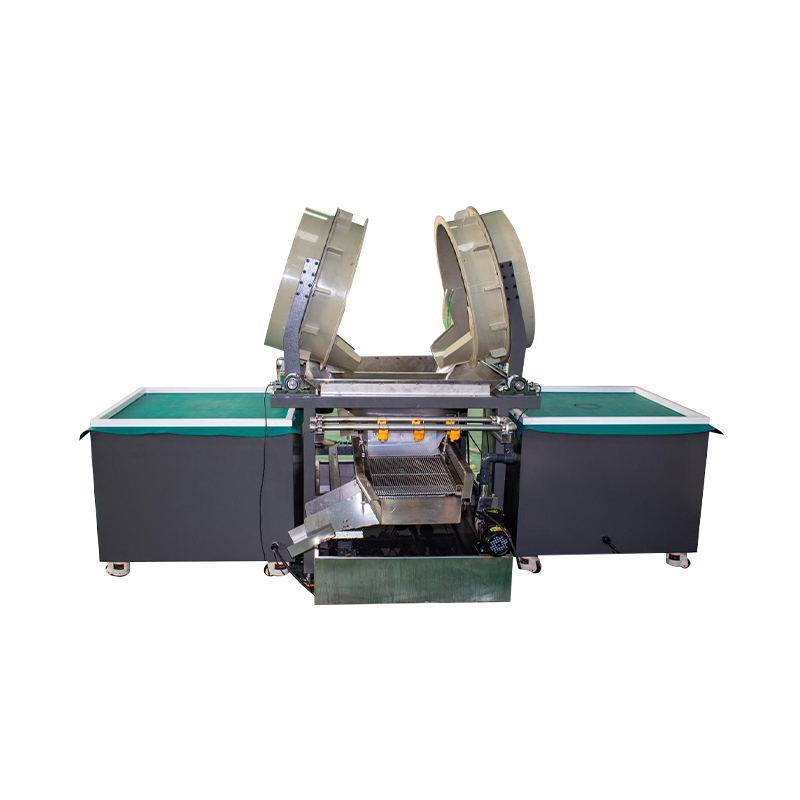
| Dual station tilt | Higher throughput, less manual handling | Index time, how it links to your existing cell |
| Through feed inline | Continuous flow alongside assembly | Conveyor speed matching, part orientation, controls |
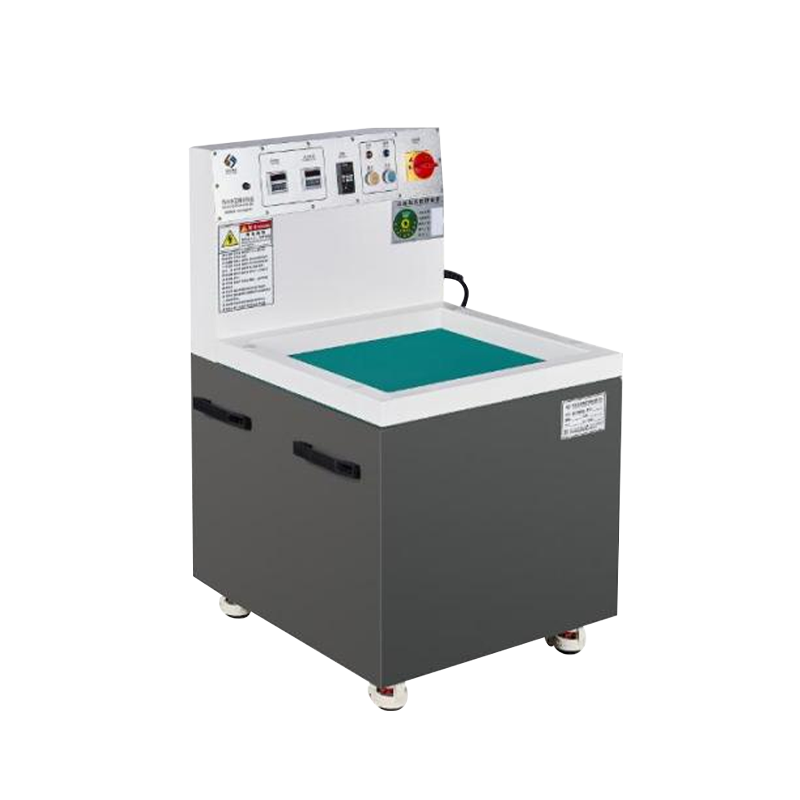
For most job shops the starting point is a standard industrial machine, sized for everyday batch work and manageable by a single operator.
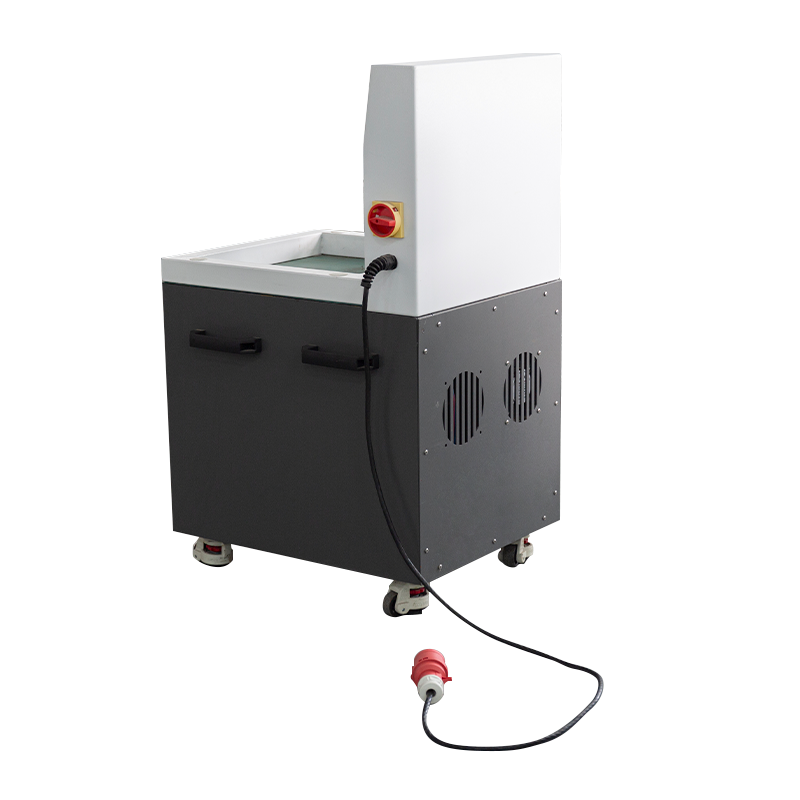 SY8120 Standard Industrial Magnetic Deburring and Polishing MachineA standard industrial magnetic deburring and polishing unit for everyday batch work, suitable for precision parts, medium-batch continuous operation and single-operator use.View Product →
When the Process Has to Keep Up with a Line
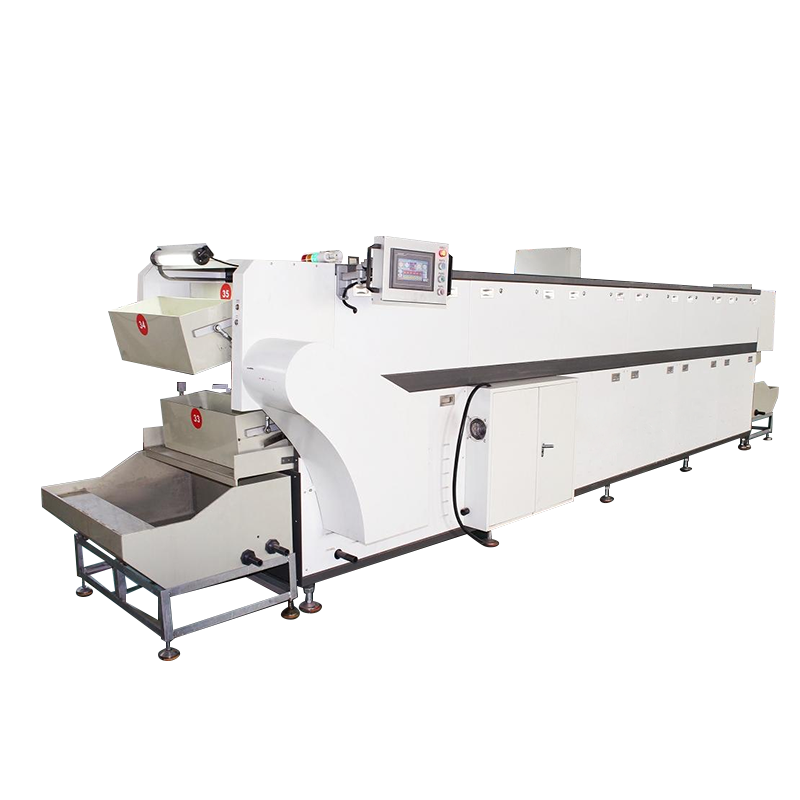
Automation changes the conversation. When parts are already moving on a conveyor and the finishing step sits between two stations, you do not want a batch machine with a door. You want something that accepts parts as they arrive and returns them finished at a matched speed, so the inline step adds quality instead of becoming a bottleneck.
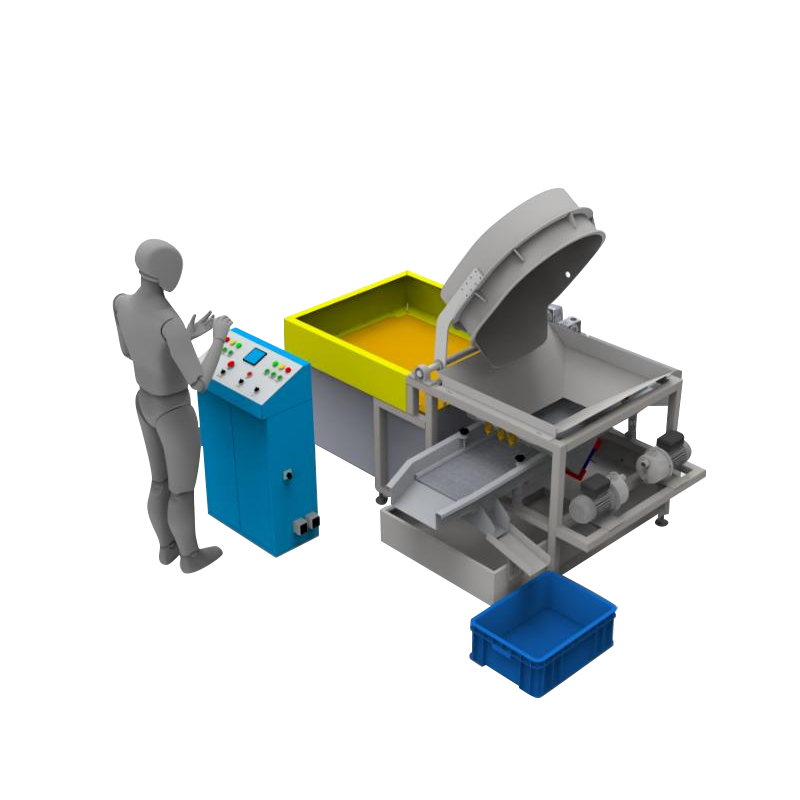
That is the role of the through-feed family. Parameters are tied to line speed rather than batch count, and the unit is built to sit inside a cell rather than in an isolated finishing room. A dual-station tilt machine is the middle option: it keeps the batch logic but cuts handling time, because the operator loads one station while the other runs.
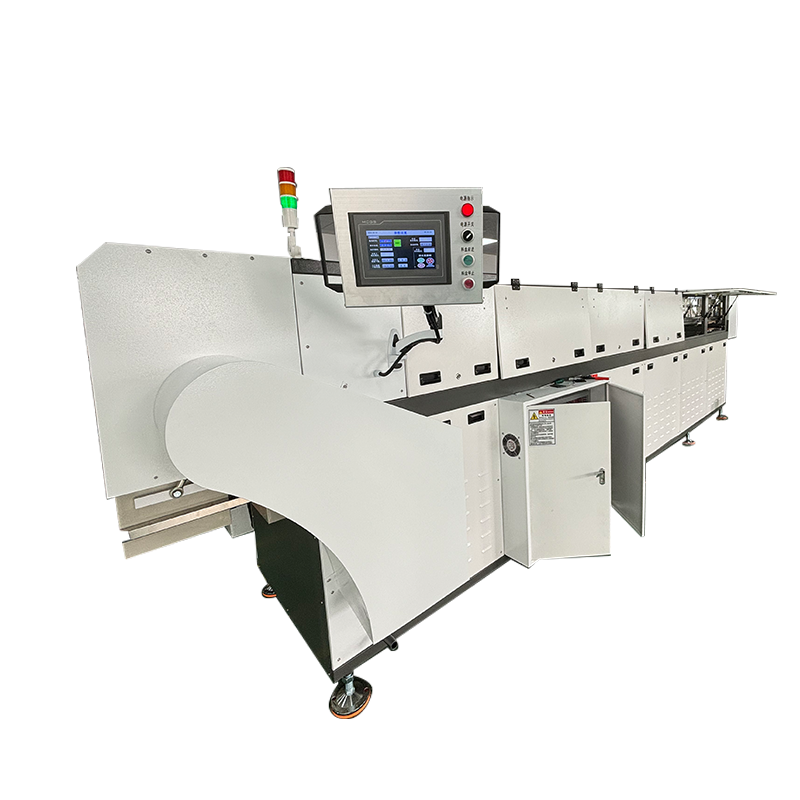 SY-P Series Continuous In-Line Automatic Magnetic Deburring Polishing MachineA tunnel-type magnetic polishing system for continuous mass-production deburring and cleaning, with modular bed lengths and separately controlled magnetic disks for line-integrated finishing.View Product →
The Supporting Cast: Media, Compound and Water
The machine is only half the process. The other half is what goes into the tank and what happens to the parts afterwards.
- Pins carry the force. Their size and shape decide how well the mass reaches narrow slots or broad flat faces.
- Abrasive media set the finish: finer cuts brighten, coarser cuts remove faster.
- Compound keeps the pins clean, suspends removed material and protects parts from rusting during the cycle.
- Water quality and temperature affect consistency, which is why temperature control matters on heavy daily use.
After polishing, most parts need rinsing and drying before they move on. We also build the equipment that surrounds the step — precision ultrasonic cleaning machines, constant-temperature chillers and a water circulation purification system that lets a shop reuse process water instead of draining it daily. Treating these as one system rather than four separate purchases is usually where the real saving in floor space and running cost comes from.
Proving It on Your Own Parts
No specification sheet settles a finishing question faster than a real sample. Send the parts with the burr condition and the finish you need, and a trial returns something far more useful than a brochure: a measured cycle time, a media recipe and a photo of your own components. We keep a bench-scale machine for exactly this work, and the recipe transfers directly to a larger unit when volume arrives.
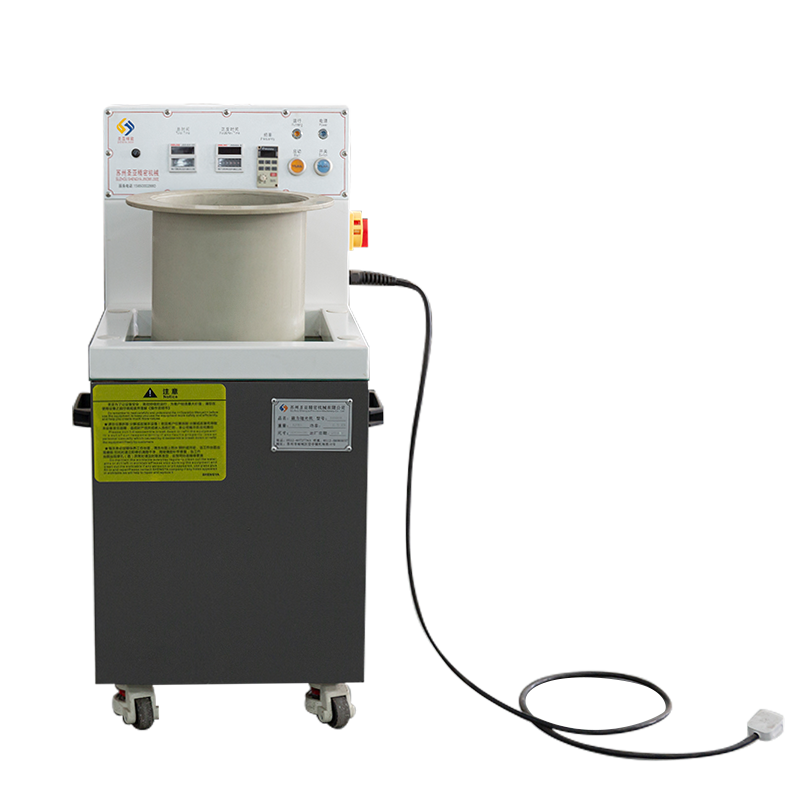 SY8080 Lab-Grade Small-Batch Precision Magnetic Deburring Polishing MachineA bench-scale magnetic finishing machine for prototyping, sampling and small-batch precision parts, useful for trial runs before scaling a recipe to larger units.View Product →
Running It Well, Week After Week
Machines in this family are low maintenance, but they are not maintenance free. The habits that keep results stable are simple:
- Top up the pins as they wear and screen out any that have broken.
- Check compound concentration on a schedule, not by eye.
- Change the working fluid before it turns grey with suspended material.
- Watch tank temperature during long shifts.
- Record the recipe for every part number.
A Short Checklist Before You Buy
- Will the supplier run a trial on your actual parts and give you a measured cycle time?
- Does the machine accept your largest part without a special fixture, and your smallest without losing it in the tank?
- Does the configuration match your batch size, or will you be loading it three times a day?
- Can the recipe be stored, repeated and handed to a different operator?
- What happens downstream — rinsing, drying and the water you will use every day?
Magnetic abrasive polishing is not a magic finish. It is a controlled, repeatable process that does one job very well: it takes the burrs and rough edges off machined parts, in bulk, without clamp marks and without depending on how patient the operator feels that afternoon. For many shops, that is enough to change the rhythm of the whole finishing department.
If you are weighing it up, the fastest route to a decision is a sample. Tell us what you are making and we will run it, then show you the numbers — cycle time, finish and how the process would look inside your own production. Reach the team through our contact page and we will take it from there.