 en
en English
 中文简体
中文简体 Español
 русский
 Français
 عربى
عربى Deutsch
 Português
 日本語
日本語 한국어
한국어 italiano
Shengya
Shengya
Shengya
Shengya
Shengya
Shengya
Shengya
Shengya
Shengya
Water is the quiet workhorse of almost every metal finishing line. It rinses parts after deburring, carries heat away from polishing spindles, feeds ultrasonic cleaning tanks and flushes abrasive media out of the work zone. It also takes everything it touches with it: metal fines, tramp oils, polishing compounds and dissolved salts. An industrial water treatment system exists to catch those contaminants, return clean water to the process and keep a plant comfortably inside its discharge permit.
Because we build deburring, polishing, cleaning and cooling equipment, we spend a great deal of time watching how water actually behaves on shop floors. This guide walks through what these systems do, which contaminants they remove, how to size them and how to connect them to the machines already running in your plant.
What an Industrial Water Treatment System Actually Does
An industrial water treatment system is a connected train of physical, chemical and occasionally biological steps that turns dirty process water into water you can reuse, recycle or discharge. At industrial scale it is rarely a single machine. It is a sequence: equalisation, chemical dosing, settling or flotation, filtration, membrane or ion exchange polishing and, where required, disinfection.
Plants invest in treatment for a mix of four reasons:
- Compliance: meeting limits on suspended solids, heavy metals, oils, pH and organic load before water leaves the site.
- Reuse: sending treated water back to rinse tanks, cleaning baths or the cooling loop instead of buying fresh water.
- Equipment protection: keeping scale, corrosion products and biofilm away from heat exchangers, pumps and spray nozzles.
- Cost control: reducing water purchase, sewer tariffs and tanker disposal charges that quietly dominate a finishing budget.
Where the Water Picks Up Contamination
Before choosing equipment, map the water streams in your building. Every stream carries a different contaminant load, and treating them as one blended problem usually means paying for capacity you do not actually need.
| Water stream | Typical contaminants | Why it matters | Usual treatment approach |
|---|---|---|---|
| Rinse water after deburring and polishing | Metal fines, abrasive media residue, polishing compounds | Clogged nozzles and water spots on finished parts | Settling, filtration, partial recycle |
| Ultrasonic and spray cleaning baths | Oils, surfactants, dissolved soils | Bath life collapses and parts come out dirty | Oil separation, skimming, filtration, controlled dumping |
| Cooling water loop | Scale, corrosion products, biofilm | Poor heat transfer and rising energy costs | Side-stream filtration, chemical conditioning, blowdown control |
| Boiler or process feed water | Hardness, silica, dissolved solids | Scaling and foaming inside heat exchange equipment | Softening, reverse osmosis, deaeration |
| Central wastewater discharge | Mixed metals, suspended solids, fluctuating pH | Permit violations, surcharges and inspection pressure | Equalisation, neutralisation, coagulation, flocculation, polishing |
The Treatment Train, Step by Step
Most industrial systems are assembled from the same building blocks, arranged in whatever order makes sense for the contaminants present.
Solids and oil removal
- Coagulation: a chemical dose neutralises the charge on fine particles so they can gather together.
- Flocculation: gentle mixing builds those particles into larger, heavier flocs.
- Sedimentation or flotation: flocs settle in a clarifier or rise to the surface and are skimmed away.
- Filtration: multimedia, bag or cartridge filters capture what remains and protect everything downstream.
Dissolved contaminants
Dissolved metals, hardness and salts need more than physical separation. Chemical precipitation drops metals out as a sludge, ion exchange swaps unwanted ions for harmless ones, and reverse osmosis pushes water through a membrane that rejects most dissolved solids. Activated carbon handles residual organics, colour and odour.
Cooling water and closed-loop conditioning
Cooling loops are a treatment problem in their own right. As water evaporates, dissolved solids concentrate and scale begins to form on heat transfer surfaces. Side-stream filtration, controlled blowdown, corrosion inhibitors and a properly sized chiller keep the loop stable and the surface finish consistent.
Final polishing and reuse
The last stage sets the reuse quality. Ultraviolet irradiation, fine filtration and polishing stages bring water up to the standard demanded by the most sensitive point of use in the plant, whether that is a rinse tank, an ultrasonic bath or a high-pressure spray bar.
Sizing an Industrial Water Treatment System for Your Shop
Oversizing wastes capital; undersizing wastes everything else. We suggest working through five questions in order:
- Measure the flow. Record peak and average flow for each stream, not just the daily total.
- Characterise the water. Test for suspended solids, metals, oils, hardness, conductivity and pH so the design starts from data rather than assumption.
- Define the target. Decide whether the output feeds a rinse tank, a cleaning bath, a cooling loop or the drain, because each destination has a different quality threshold.
- Plan the residuals. Sludge, spent media and membrane concentrate all need a legal and affordable route out of the building.
- Leave room to grow. Build in capacity for a second shift, a new line or tighter permit limits instead of rebuilding in three years.
Where Treatment Meets Deburring, Cleaning and Cooling
Water treatment does not sit in isolation at the back of the plant. On a well-designed line it is stitched directly into the finishing process, and the three connections below are where most of the practical value is created.
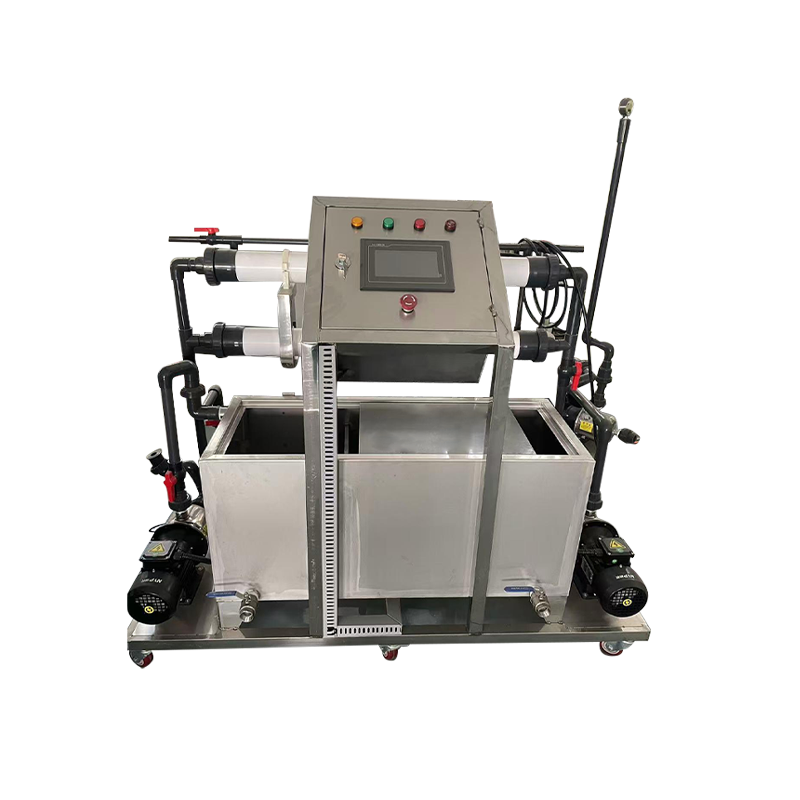
Closed-loop circulation usually delivers the fastest payback. The SY160L-H industrial water circulation purification system is built to keep rinse and cleaning water in service far longer, removing fines and oils continuously so a bath dump becomes a scheduled event rather than a Friday afternoon emergency.
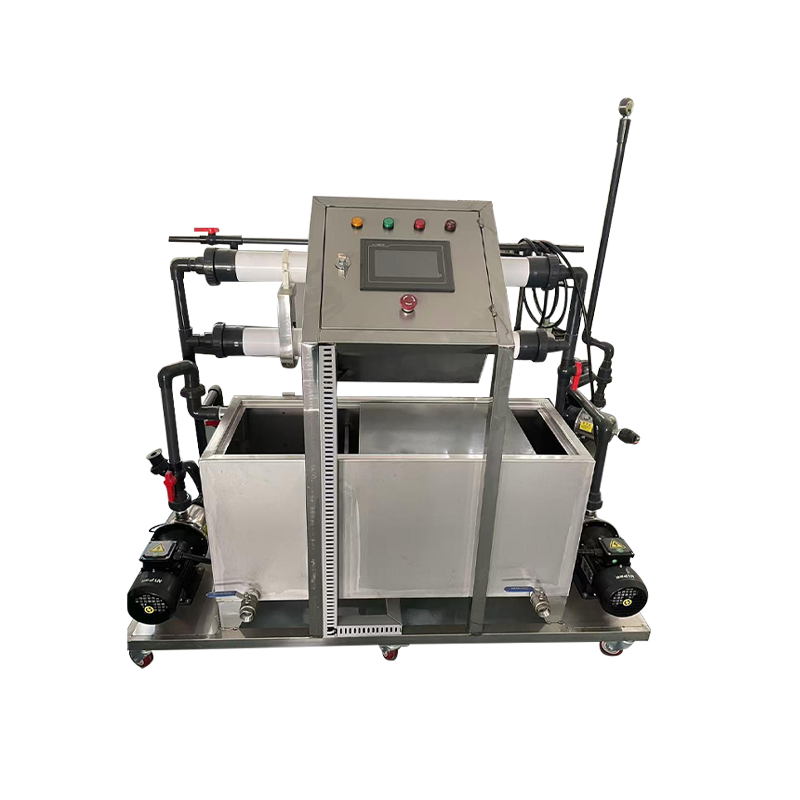 SY-160L/H Industrial Water Circulation & Purification SystemPositioning Eco-Friendly Closed-Loop: The SY-160L/H is a wastewater treatment and reclamation system engineered specifically for precision grinding workshops. Designed...View Product →
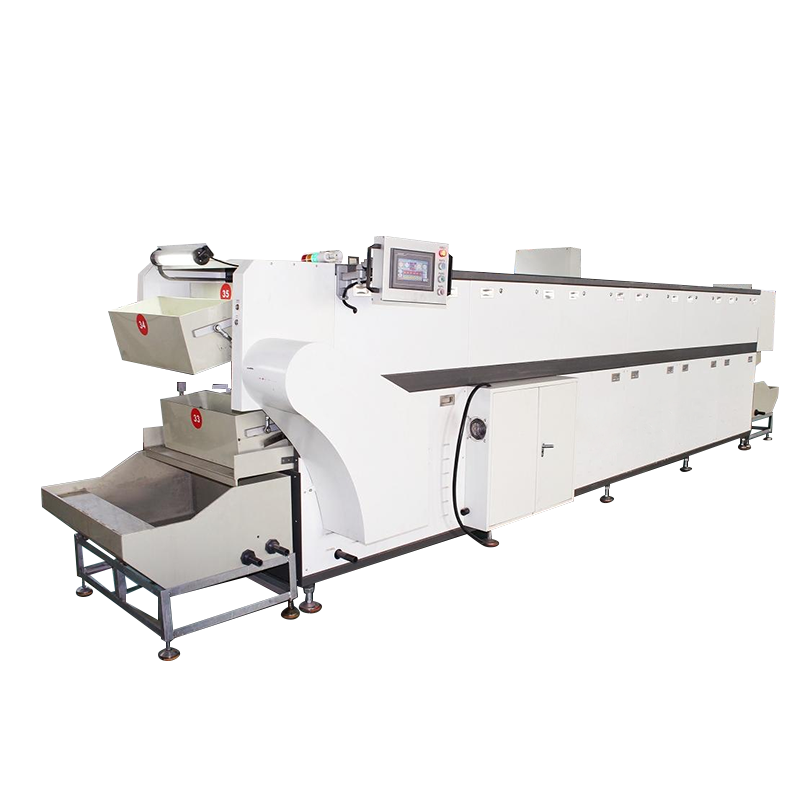
Cleaning quality follows the same logic. A precision ultrasonic cleaning machine only performs at its best when the bath feeding it is genuinely clean, which is why we size the cleaning stage and the treatment stage together rather than as two separate purchases.
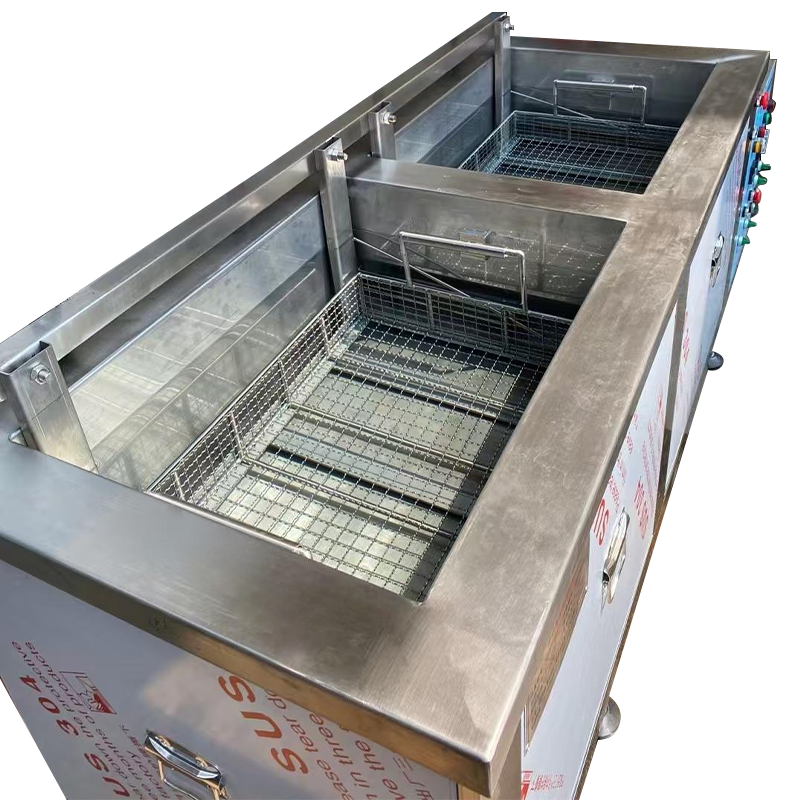 Custom Industrial Precision Ultrasonic Cleaning MachinePositioning Industry Application: This system serves as a critical surface cleanliness solution for high-precision manufacturing sectors. Widely applied in semiconduct...View Product →
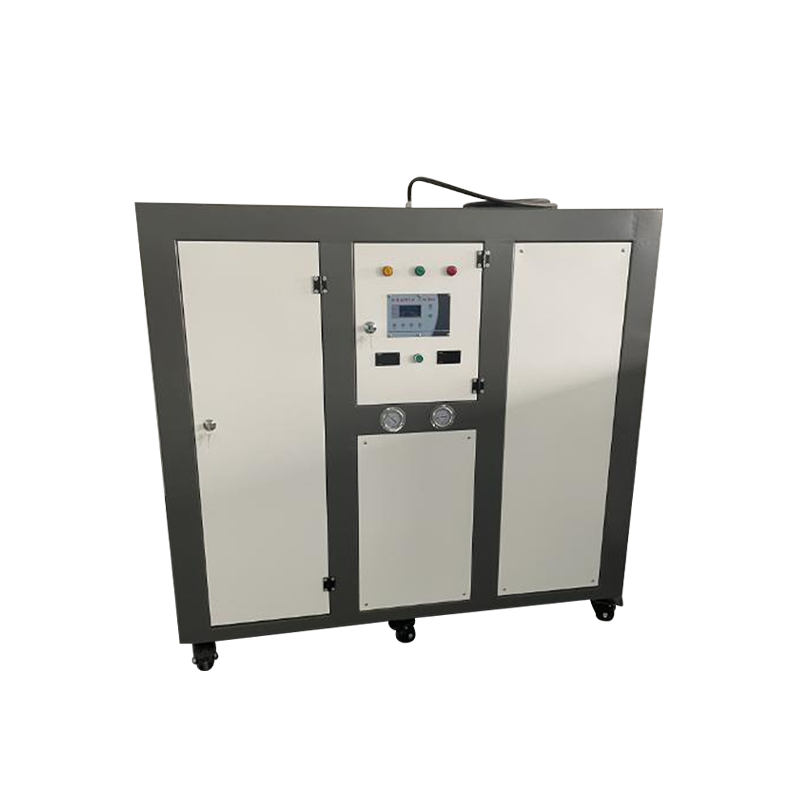
Temperature is the third piece of the puzzle. An industrial circulating chiller with a constant-temperature cooling system holds process water steady, protecting both the surface finish on your parts and the treatment media downstream.
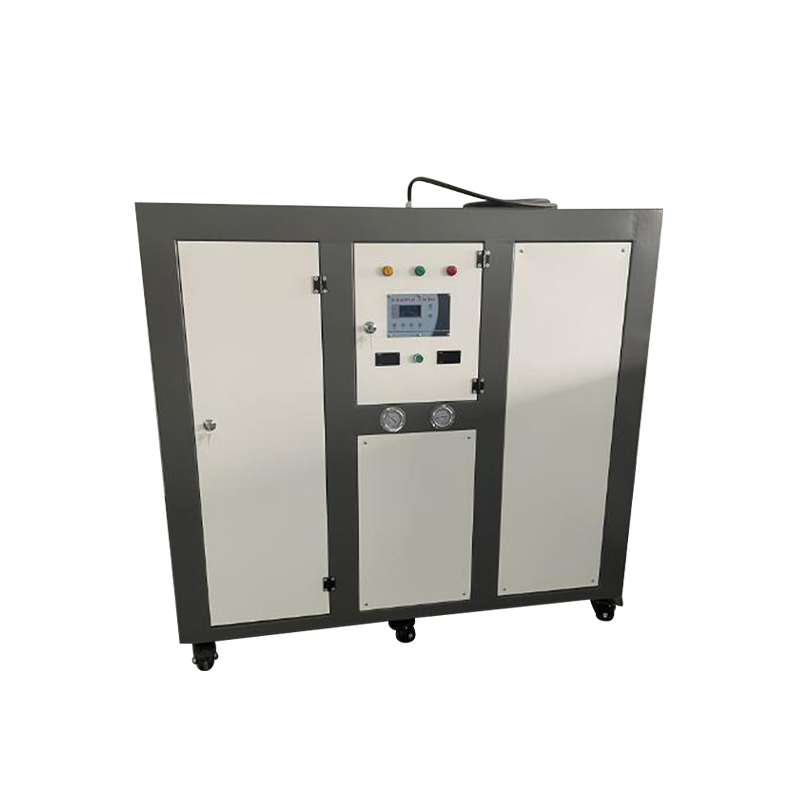 Industrial Circulating Chiller Unit / Constant Temperature Cooling SystemPositioning Thermal Management Solution: This Circulating Chiller is the "thermal control hub" for high-performance magnetic polishing lines. Utilizing a built-in high...View Product →
Circulation, cleaning and cooling together form the water side of a deburring and polishing line. They work best when a single team specifies them against the same flow data.
Operating Costs and Maintenance Habits
Treatment systems rarely fail overnight. The warning signs appear long before a permit problem does, and a handful of habits keep performance predictable:
- Check dosing pumps and chemical levels weekly; a starving coagulant dose stays invisible until the clarifier clouds over.
- Log pressure differentials across filters and membranes so replacement is planned rather than reactive.
- Calibrate pH, conductivity and turbidity sensors on a fixed schedule.
- Inspect cooling loops for biofilm before it turns into a heat transfer problem.
- Keep sludge and spent media records in order for audits and disposal paperwork.
Getting the Selection Right
Suppliers can quote almost any combination of tanks, membranes and dosing skids, so the deciding factor is usually how closely the design matches your real water. Ask for a water analysis review, a mass balance and a clear statement of what the system will and will not remove. If you want a structured starting point, this guide on how to pick the right industrial water treatment system covers the questions worth asking before you sign anything.
If your water problem is tied to deburring, polishing or cleaning equipment, it makes sense to solve it alongside those machines rather than after them. You are welcome to talk to our engineers about your flow rates and your latest water test results.
An industrial water treatment system is less a product than a design decision. Get the stream mapping, the water analysis and the reuse target right, and the equipment list almost writes itself. Get them wrong, and even a well-built treatment train becomes an expensive set of tanks. Start with the water, size for the process and connect treatment to the finishing line from day one, and you end up with cleaner parts, lower bills and far fewer surprises.