 en
en English
 中文简体
中文简体 Español
 русский
 Français
 عربى
عربى Deutsch
 Português
 日本語
日本語 한국어
한국어 italiano
Shengya
Shengya
Shengya
Shengya
Shengya
Shengya
Shengya
Shengya
Shengya
When a CNC-machined part leaves the milling cell, its edges often carry burrs that you cannot afford to ignore. Those sharp projections cause scratches during handling, interfere with plating or coating, and create failure points in assembled products. Many shops answer this problem with a standard magnetic deburring polisher, but the standard machine only works when the part fits the bed, the cycle time matches the production plan, and the transfer method suits the operator's reality.
The practical conclusion is simple: if your parts are unusually long, extremely wide, or routed through an automated line, a custom-made deburring polishing machine offers the most reliable way to hit your surface finish target without slowing down the rest of the shop. The machine will cost more in engineering effort, but it reduces the handwork, rejects, and secondary operations that create hidden costs in every batch.
What a Custom-Made Deburring Polishing Machine Actually Means
A custom-made deburring polishing machine is not a blank-slate design. It starts with a proven magnetic polishing platform and adjusts the elements that directly affect your parts: bed length, drive count, movement pattern, and automation level. Magnetic deburring uses abrasive media and a rotating magnetic field to reach cavities, slots, and cross-drilled holes that brush and grinding wheels cannot touch.
The main customization paths visible in manufacturer product lines include horizontal reciprocating beds for long parts, auto-tilt reciprocating machines for higher throughput, and continuous pass-through designs for integration with an existing conveyor or assembly line. Each option addresses a specific production constraint.
When you work with a source manufacturer, the conversation begins with your part drawings and production volume, not with a catalog model. That is the practical value of a custom machine: the equipment follows the process, not the other way around.
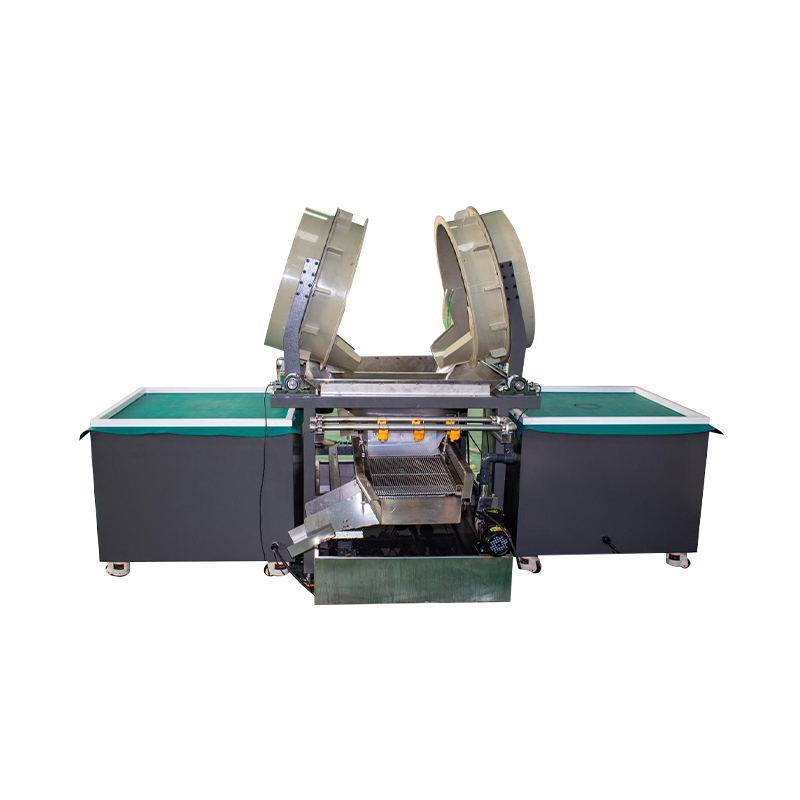
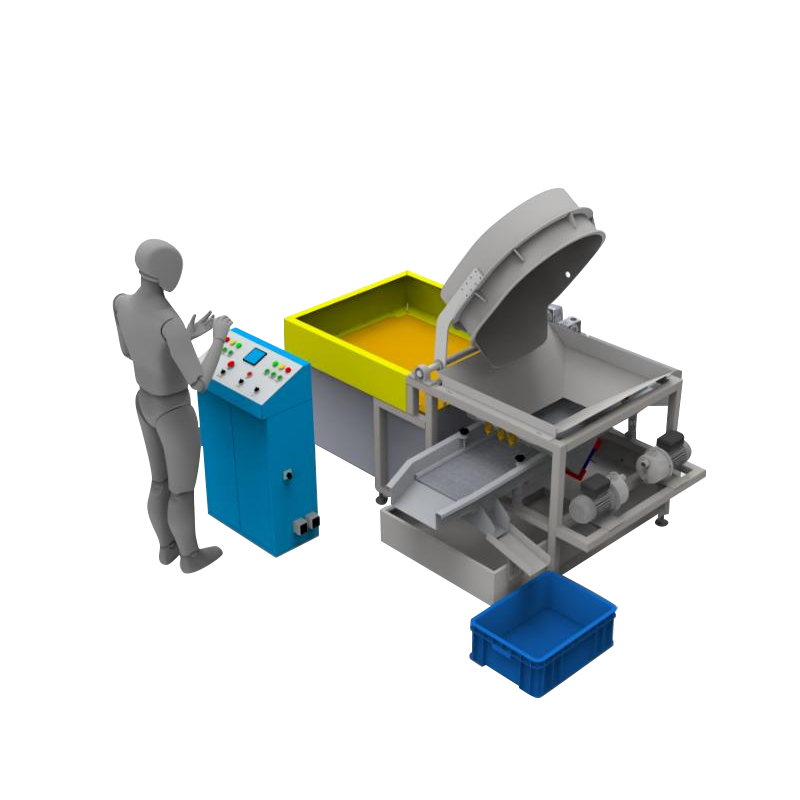 Custom Deburring and Polishing Machines for Process-Driven ManufacturingTailored magnetic deburring and polishing equipment that adapts to your part drawings and production volume, ensuring consistent, repeatable finishing through parameter optimization rather than operator intuition.View Product →
When Customization Is Worth the Investment
The decision to customize should be based on measurable production conditions, not on a vague desire for a special machine.
| Factor | Standard machine | Custom-made machine |
|---|---|---|
| Maximum part length | Typically limited to the factory bed length, e.g. 1200–1800 mm | Extended bed up to 2–6 meters, with multiple drives to maintain field strength |
| Cycle throughput | Single-station batch processing | Dual-station or inline pass-through for continuous flow |
| Automation integration | Manual loading/unloading | Feeder, robot interface, or conveyor-ready outlets |
| Part movement | Fixed horizontal reciprocation | Auto-tilt, dual-station, or pass-through motion tailored to media contact |
If your longest component is 1500 mm and your standard bed is 1400 mm, you will hear the answer immediately after a trial run. If your target annual output is 40,000 pieces per shift, a single-batch machine will create a bottleneck. If you are placing the deburring operation inside a fully automated line, a standalone machine will force an operator to hand-carry parts in and out, which defeats the purpose of automated production.
Those are exactly the situations where a custom-made design returns the investment. The machine does not need to be more expensive per gram of steel; it needs to match the process so that overall cost per finished part remains competitive.
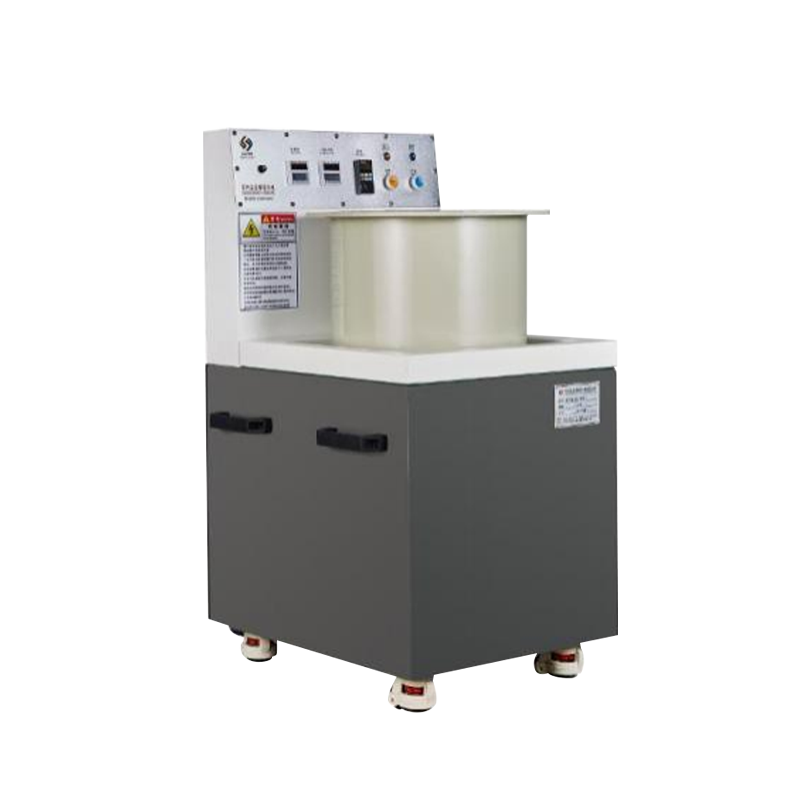
Linear Magnetic Deburring and Polishing Machines for Precision FinishingLinear-flipping magnetic polishing machines enhance coverage of internal features and hard-to-reach areas, consolidating deburring and surface refinement into a single repeatable process that supports production consistency.View Product →Key Specifications That Define a Custom Machine
Before you ask for a quote, you need to understand the four variables that engineers will ask about. The first is bed length. Manufacturer model numbers provide a useful shorthand: SY1200, SY1400, SY2200, and SY2800 point to progressively longer beds, with the 2–6 meter class requiring two or three drives to maintain a uniform magnetic field across the entire surface.
The second variable is drive configuration. A long bed with a single drive loses power at the far end, leaving parts near the tail under-processed. Dual-drive and tri-drive systems solve this by distributing magnetic force along the chamber. The third variable is movement pattern. Horizontal reciprocating beds are simple and reliable. Auto-tilt machines add an angular motion that helps media flow across complex geometry. Continuous pass-through designs carry parts through the tunnel on a conveyor, which is necessary for high-volume flow.
The fourth variable is automation level. A custom unit can be built with one station, two stations, or as a complete inline module with sensors, ejection, and transfer mechanisms. The right choice depends on your available labor and the cycle time of the preceding operation.
How a Custom Machine Is Engineered: From Inquiry to Commissioning
Ordering a custom machine is a process, not a simple quote request. It starts with sending part drawings, preferably in 3D, together with a batch size and a description of the burr condition. The manufacturer will look at the edges, the material, the required consistency, and the overall cycle target.
At the design stage, engineers select a base platform and model the modifications in CAD. The key output is a dimensional drawing showing the bed, drive positions, media return, and loading zones. Before production, the best suppliers offer a process trial using your parts or equivalent samples. This trial reveals the needed cycle time, media mixture, and surface finish achievable. If the machine passes the trial, the manufacturer proceeds to assembly and factory commissioning. You should not accept a quotation that skips this validation step.
A source manufacturer can do this more efficiently because the same team builds the machine and runs the process tests. There is no translator between the machine shop and the factory, no extra markup for a trading company, and no guesswork about what "custom" means in a translated brochure.
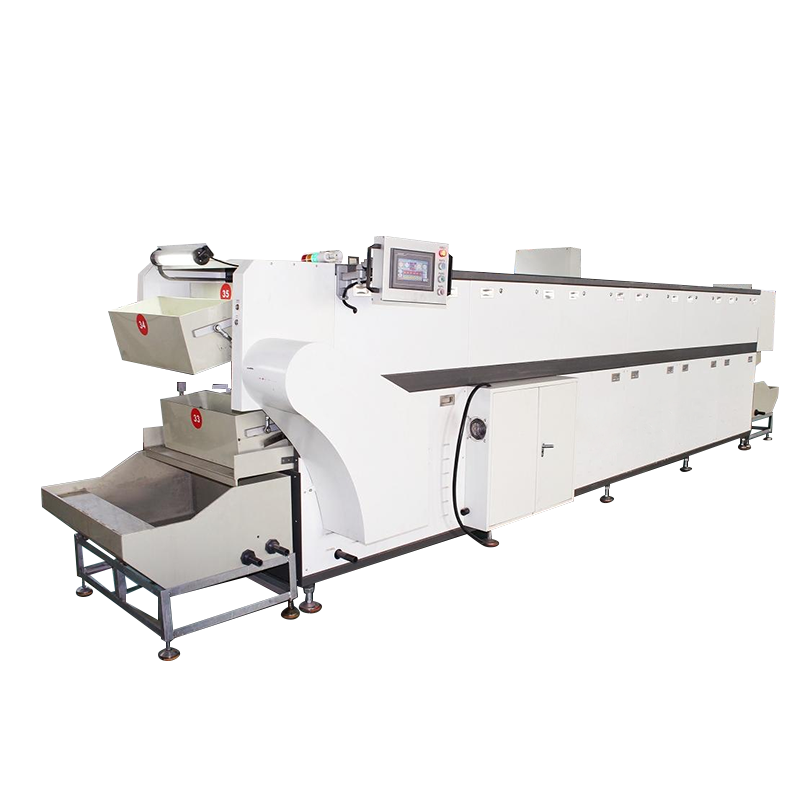
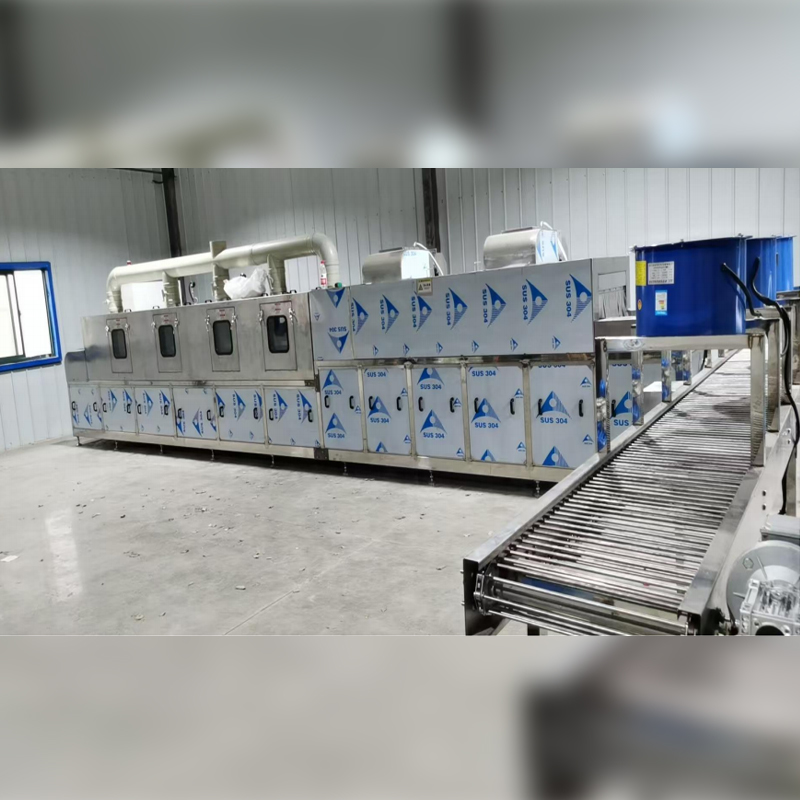
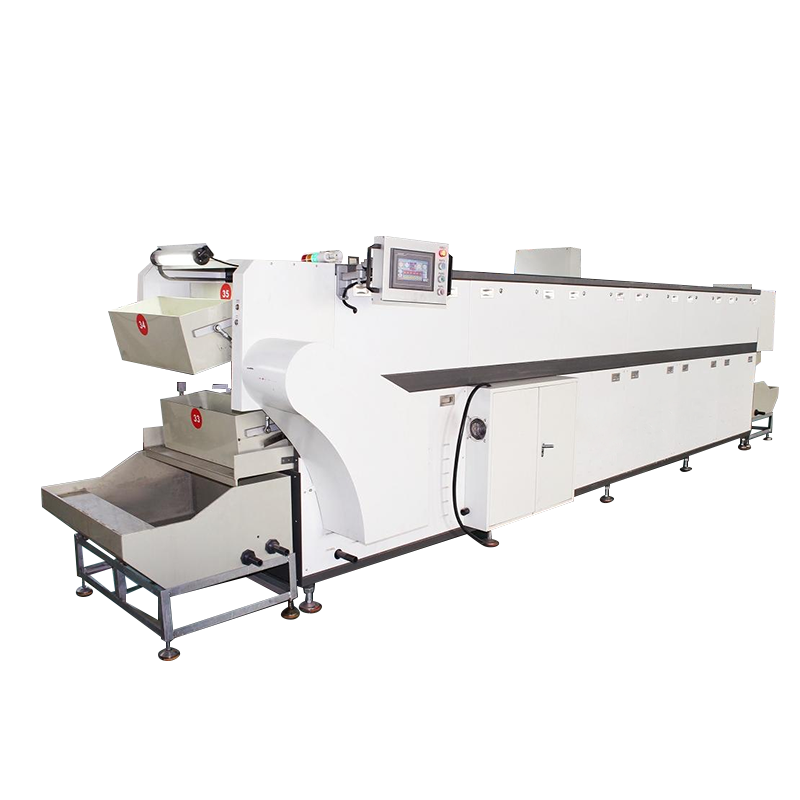 Continuous Pass-Through Magnetic Deburring and Polishing SystemsIn-line magnetic finishing systems that process parts continuously through the magnetic field, combining deburring and cleaning to reduce handling, minimize variability, and support stable takt times in high-volume operations.View Product →
When the machine arrives, commissioning includes setup of the magnetic drive, media loading, water circulation, and safety interlocks. After the first batch, the process parameters are locked in and documented, so the operator can reproduce the result on every shift.
Three Common Mistakes When Buying a Custom Deburring Polisher
- Choosing a supplier based on price alone. A custom machine is only as good as its process validation capability. If the supplier cannot demonstrate results with your part samples, the cheapest unit becomes a production liability.
- Omitting the real cycle time. You might give the machine builder the longest part, but not the full set of parts or the number of pieces per shift. The resulting equipment may have the right bed size but the wrong throughput, causing a bottleneck during peak weeks.
- Forgetting the downstream steps. Deburring creates swarf and residuals. In many production lines, you need an ultrasonic cleaning machine, a temperature-controlled cooling loop, or a water circulation purification system to keep the process stable and the floor dry. A custom deburring machine should be specified together with these supporting units, not in isolation.
Each of these mistakes is avoidable with a written specification that includes part drawings, batch size, material type, burr tolerance, and the desired surface finish. Agree on the process parameters before you order the steel.
The real value of a custom-made deburring polishing machine is not the label "custom." It is the ability to convert your specific production problem into a repeatable, measurable process. Instead of sending a machine model number, send a part sample and a production requirement. That is how a manufacturer can define the correct configuration and give you a machine that actually performs.
If you are uncertain whether your parts need a custom design, start by reading our practical guide to what a custom-made deburring polisher does and whether your shop is a good fit. Then contact our engineering team with your drawings or a physical sample, and we will run the process test before recommending a configuration.