 en
en English
 中文简体
中文简体 Español
 русский
 Français
 عربى
عربى Deutsch
 Português
 日本語
日本語 한국어
한국어 italiano
Shengya
Shengya
Shengya
Shengya
Shengya
Shengya
Shengya
Shengya
Shengya
Think about the last 20 minutes of a shift in a metal finishing shop. Parts come out of polishing or deburring with fine media dust, tiny burrs, and cleaning solution residue. An operator stands at a tank with a brush, a wipe-down station, and a stack of parts that all need to be clean enough to ship. If that operator starts re-cleaning parts or sorting good parts from marginal ones, the bottleneck has moved to the cleaning station. That is why an industrial cleaning machine should be seen as a production tool, not an afterthought.
What Counts as an Industrial Cleaning Machine?
An industrial cleaning machine is a dedicated, repeatable system that removes machining fluids, chips, abrasive residue, or surface films from parts. It is not a spray gun attached to a washing sink. The machine controls temperature, cycle time, solution concentration, filtration, and the way parts move through the process. In many metalworking plants, it is the bridge between a surface-finishing operation and assembly, plating, or packaging.
| Type | Principle | Typical use |
|---|---|---|
| Aqueous spray washer | Recirculated detergent and water at pressure | Machined parts, chips, light oil |
| Ultrasonic cleaner | High-frequency cavitation in a heated bath | Complex geometries, blind holes, precision parts |
| Solvent vapor degreaser | Condensed solvent vapor rinses residue | Critical cleaning with low water tolerance |
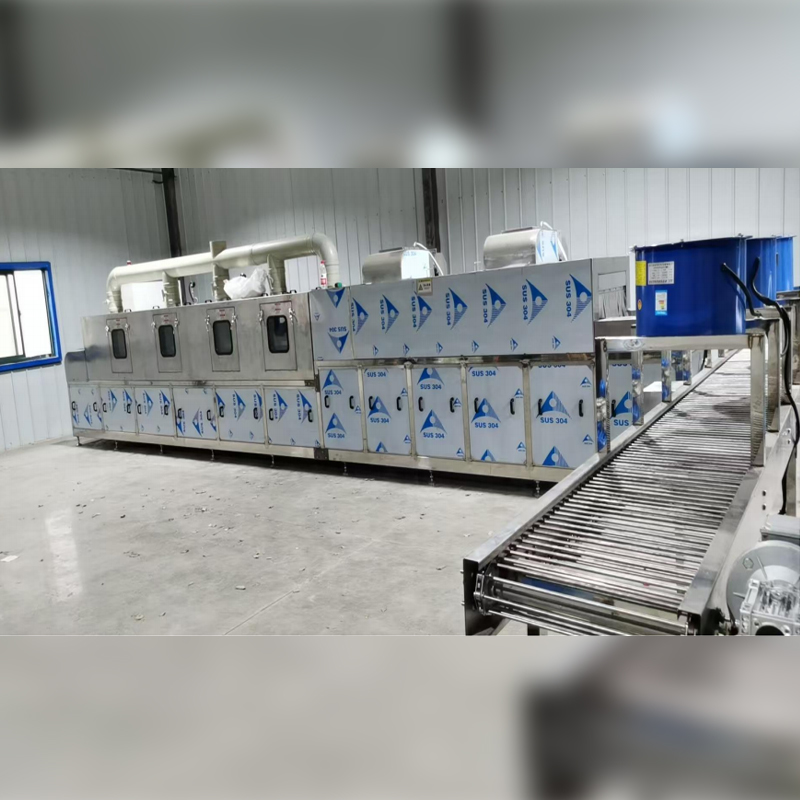
| Pass-through or tunnel washer | Conveyorized spray or brush stages | High-volume inline cleaning |
The market covers many names, but almost every supplier combines the same building blocks. An aqueous washer may add ultrasonics. A pass-through line may add a rinse and a drying section. The right starting point is the part geometry and the soil you need to remove.
How to Match an Industrial Cleaning Machine to Your Production Line
Start with soil and geometry
Before comparing prices, answer two questions: what is stuck to the part, and how was that soil built up? A machined aluminum bracket with coolant film is a different problem from a cast iron part with embedded abrasive media.
- Semisynthetic coolant and oil films wash off easily in an aqueous system, but they may require a surfactant and controlled temperature.
- Chips and swarf need enough solution flow and filtration so they do not redeposit.
- Polishing compounds and magnetic abrasive residues are heavier and often need turbulent agitation or ultrasonics.
- Baked-on deposits or dry powder may require a heated solution or a solvent step.
Then look at throughput and layout
The second set of questions is about volume and floor space. A standard cabinet-style cleaning machine can handle a batch of baskets, but if you need a continuous flow between deburring and finishing, a pass-through line may be a better fit. Long parts also change the choice: the rinse tank must be deep enough, and the spray headers long enough.
The ROI of Replacing Manual Cleaning
Manual cleaning is easy to underestimate. Two operators assigned to wash-and-wipe can cost a shop more than $100,000 per year in loaded labor, and that is before counting rejected parts, re-cleaning, rags, solvents, and lost floor space. Put those costs on a per-part basis first. Then add the projected machine cost, installation, utilities, maintenance, filter media, and waste handling. In many setups, the difference is enough to pay back the equipment in 12 to 24 months.
At a minimum, include these in the comparison:
- Equipment purchase price and delivery.
- Installation work: plumbing, electrical, ventilation, and leveling.
- Utility consumption: water, electricity, compressed air, and waste heat.
- Consumables: cleaning solution, rinse water, filters, and drying media.
- Labor: reduced operator time plus new time for loading, unloading, and maintaining the machine.
Payback depends on part volume and soil severity, so a generic number is only a starting point. For a step-by-step way to build the comparison, see our industrial cleaning machine types and ROI guide.
Water, Heat, and the Supporting Equipment No One Plans For
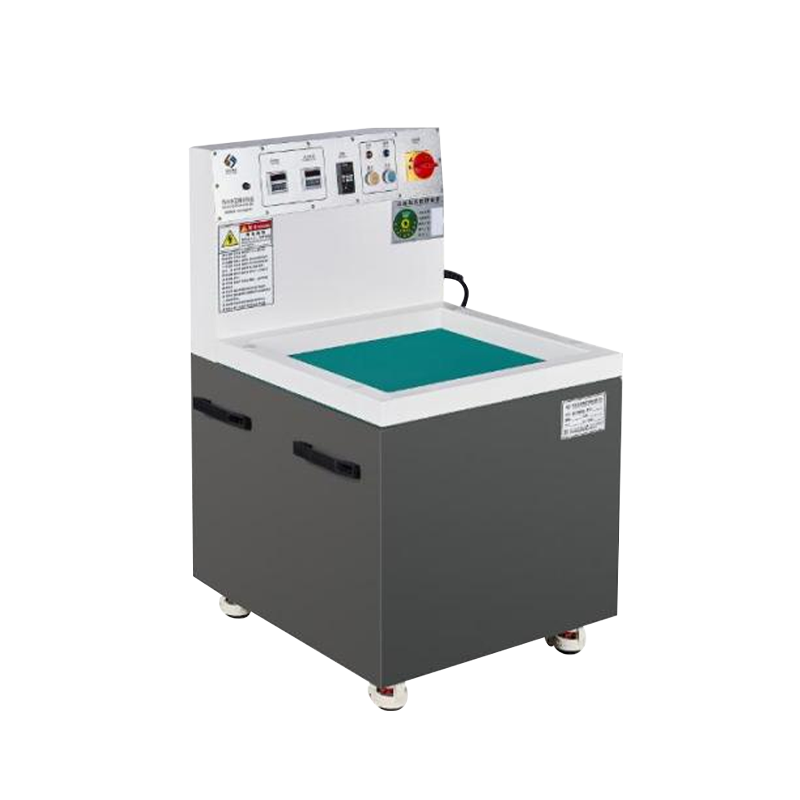
An industrial cleaning machine rarely works alone. If it runs with heated solution, it needs a heater and sometimes a chiller. If it uses water for rinsing, that water has to stay clean. If it follows a magnetic deburring or polishing operation, the abrasive media and fines must be separated from the process fluid. The support equipment can be as important as the cleaning cabinet itself.
For parts with blind holes, internal threads, or thin cross-sections, a custom ultrasonic cleaning station is usually the most consistent way to dislodge residue without touching the surface. The tank size, transducer arrangement, and filtration can be matched to the basket or rack you already use.
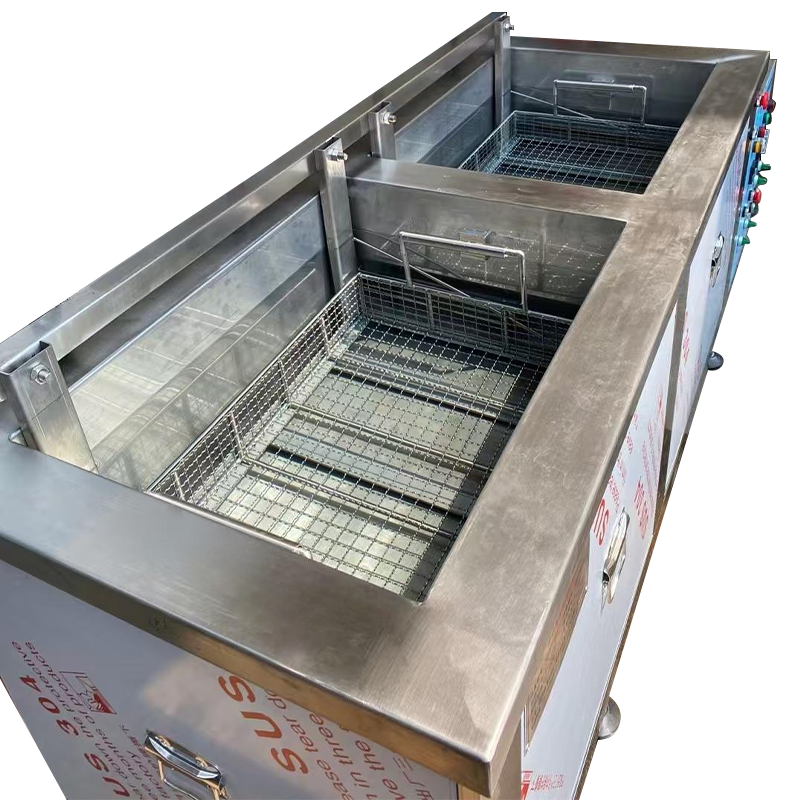 Custom Ultrasonic Cleaning Machine for Precision Industrial PartsThis bespoke ultrasonic station is built to dislodge residue from blind holes and internal threads. Its tank, transducers, and filtration can match your existing basket, making it ideal for consistent high-precision cleaning.View Product →
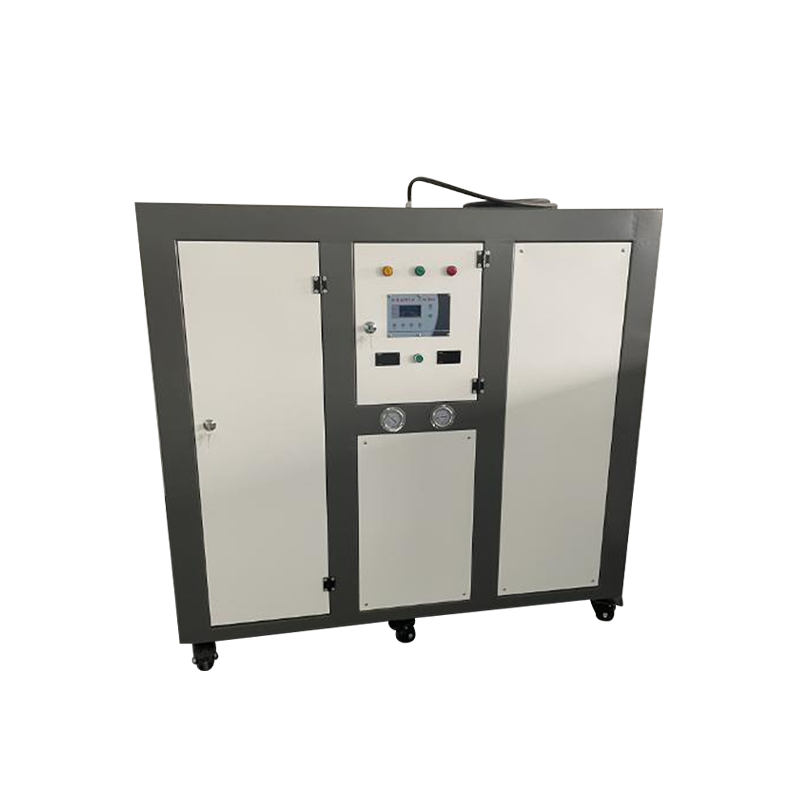
Heat is another variable that creeps into cleaning consistency. A bath that starts the morning at 52°C and drifts to 65°C by lunch may clean one part differently from the next. A constant-temperature circulating chiller keeps the process fluid inside a narrower band, which matters for both cleaning and downstream drying.
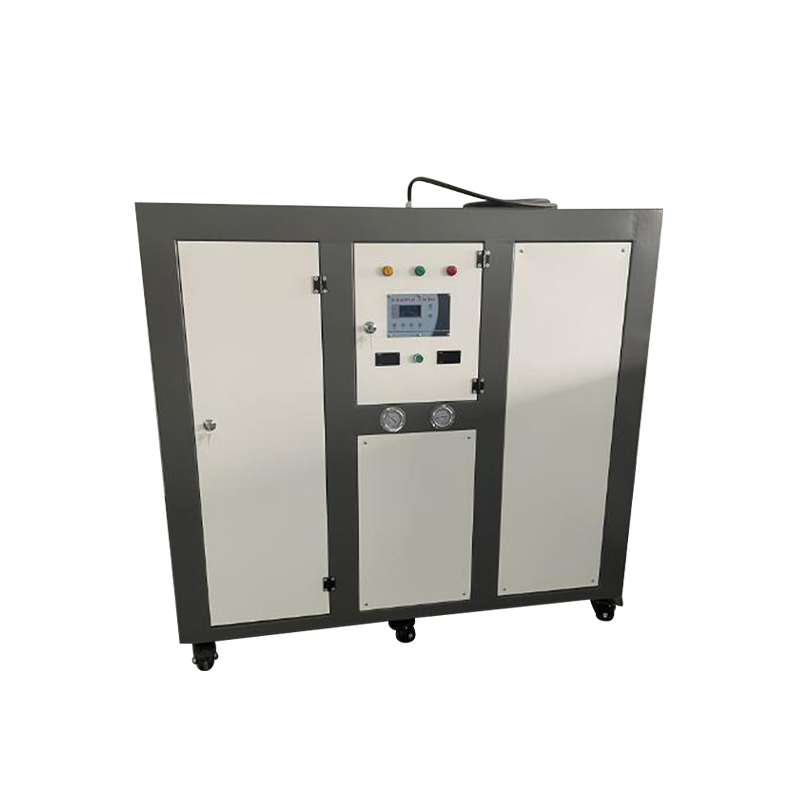 Industrial Circulating Chiller for Stable Process Fluid TemperatureA constant-temperature chiller keeps your cleaning bath within a narrow range, preventing early-morning and lunchtime drift. It maintains predictable cleaning and drying performance when heat fluctuates throughout the day.View Product →
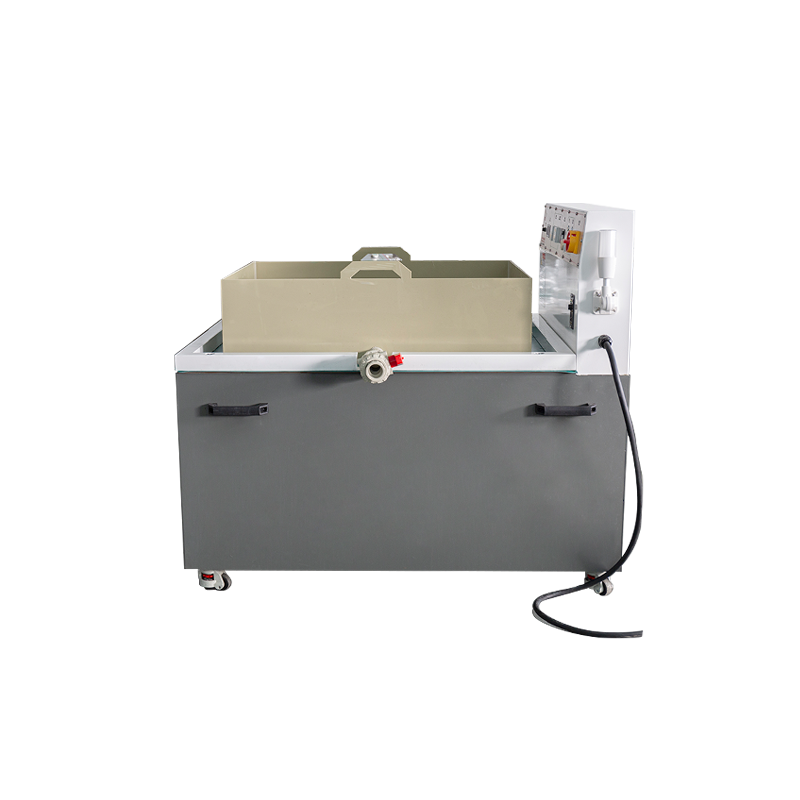
Water quality has the same effect. Hard water leaves mineral film, and dirty rinse water leaves particles behind no matter how long the cycle runs. A water circulation purification system with filtration and ion exchange reduces the need to dump the tank and keeps the rinse step predictable.
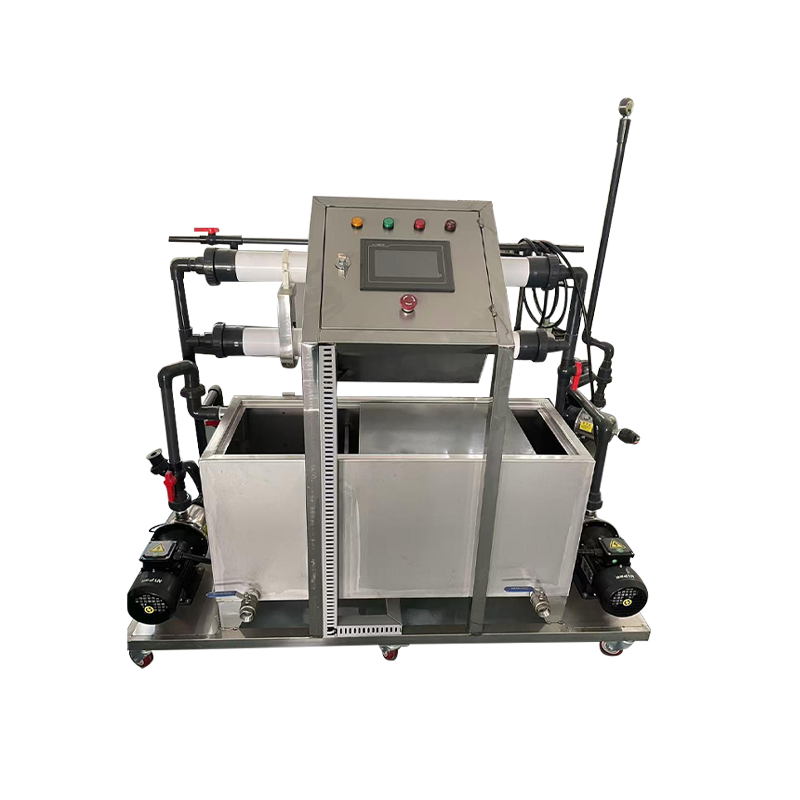 SY-160L/H Water Circulation and Purification SystemThis closed-loop filtration system removes particles and minerals from rinse water, reducing tank dumping and film buildup. With multi-stage filters, it keeps your rinse step reliable and supports consistent cleaning quality.View Product →
When these components are sized together, the cleaning machine, chiller, and water system can be mounted as a single skid. That simplifies installation and prevents the classic problem of a cleaning tank that heats beautifully in winter but overheats in summer.
Installation and Operating Considerations
Before you confirm the order, walk through the installation as if the machine were already on your floor.
- Water supply: check line size, pressure, and whether you need softened or deionized water.
- Waste: identify where liquid and solid waste go, and what your local discharge limits are.
- Electrical: confirm voltage, amp draw, and whether the machine needs a dedicated circuit.
- Ventilation: solvent or heated aqueous processes can change the air quality in the room.
- Maintenance access: plan for someone to reach filters, nozzles, heaters, and ultrasonic transducers without moving the machine.
Operator habits matter more than the brand on the nameplate. A machine with a screen still requires someone to load baskets, check solution concentration, clean strainers, and log filter changes. Build those tasks into the shift plan; otherwise, performance drifts back to manual.
Also plan for spare parts. Pumps, seals, ultrasonic transducers, filters, and heaters wear out eventually. If you run two shifts, a small spares kit can be the difference between an overnight fix and a two-week wait.
What to Verify in a Machine Trial
No quoting process should skip a trial with your own parts. A machine can look impressive in a catalog and still fail on your geometry.
- Use production parts, not clean samples.
- Soak them in the same oil or coolant your shop uses.
- Run the cycle at the temperature you expect in summer and winter.
- Measure the result with your own gauges or visual standards.
- Ask about drying time. A part that leaves one wet spot can rust before the next operation.
Catalog cycle time is almost never the whole story. You need loading and unloading time, basket change time, and time for the part to be dry enough to ship or plate.
Start with the hardest part you have to clean, not the easiest. Run it through a candidate machine with the process liquid you plan to use, and check it against your finish spec. If the machine cannot make that part repeatable, no ROI spreadsheet will change that.
From there, compare cycle time, floor space, utility consumption, and maintenance access. If you want help translating your part drawings into a cleaning line, contact us with your annual quantities and process route. We manufacture metal surface treatment and cleaning equipment, and we can usually tell you quickly whether a standard unit or a custom-built line makes more sense.